


In bulk material processing, a single bottleneck on the factory floor can disrupt your entire production schedule. Whether you are struggling with powder clumping, dealing with erratic sizing, or trying to eliminate liquid contaminants, the efficiency of your line heavily relies on one workhorse: the vibratory separator.
But here is the challenge—not all screening equipment is created equal. Investing in a sifter without analyzing your specific material dynamics often leads to frequent mesh blinding, unscheduled downtime, and wasted product. According to our internal engineering data spanning over 15 years, improperly configured round sifters account for nearly 35% of production inefficiencies in the food and chemical sectors.
This guide provides actionable insights for selecting the ideal round vibratory separator. From deciphering technical specs to resolving operational bottlenecks, we will help you make an informed decision that maximizes throughput and delivers a solid ROI.
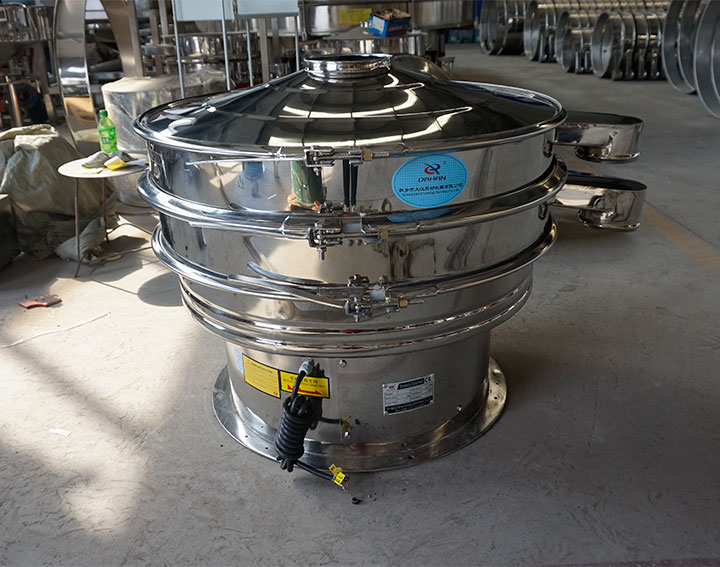
How a Round Vibratory Separator Works: 3D Motion Mechanics Explained
When evaluating a round vibratory separator, many procurement managers focus purely on the motor's horsepower. However, the real screening efficiency happens directly on the mesh surface through multi-plane inertial vibration.
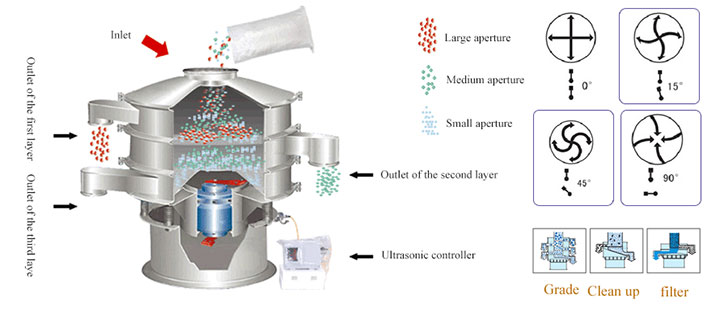
The Science of Multi-Plane Inertial Vibration
By utilizing top and bottom eccentric weights on the motor shaft, the machine transforms standard rotary motion into a dynamic 3-dimensional movement: horizontal, vertical, and inclined. This engineered 3D motion forces the material into a controlled, spiral pathway across the screen, driving high-performance separation.
Stratification and Spiral Discharge Pathway
- Instant Stratification: Finer particles travel downward through the mesh immediately.
- Gentle Discharge: Oversized particles are guided smoothly toward the outer discharge spouts.
- Continuous Flow: This automated split minimizes material accumulation to maintain a consistent flow. Laboratory tests show that optimized 3D motion increases screening efficiency by up to 40% compared to single-direction vibration.
Round Vibratory Separator Selection: 3 Critical Engineering Specs You Must Check
Selecting the right round vibratory separator requires looking past the basic mesh size. While the screen mesh determines the particle cut point, several internal engineering specifications directly dictate the equipment's longevity and efficiency. Here are the three non-negotiable factors verified in our engineering lab:
Vibratory Amplitude and Lead Angle
Adjustable eccentric weights allow you to control the horizontal and vertical lead angles. For dry powders, we recommend a lead angle between 15° and 25° to increase retention time. For wet slurries, a steeper 40°-50° angle forces rapid fluid discharge. Wrong lead angles can reduce throughput by 50%, even with the same motor horsepower.
Material of Construction (MOC): SS304 vs. SS316L
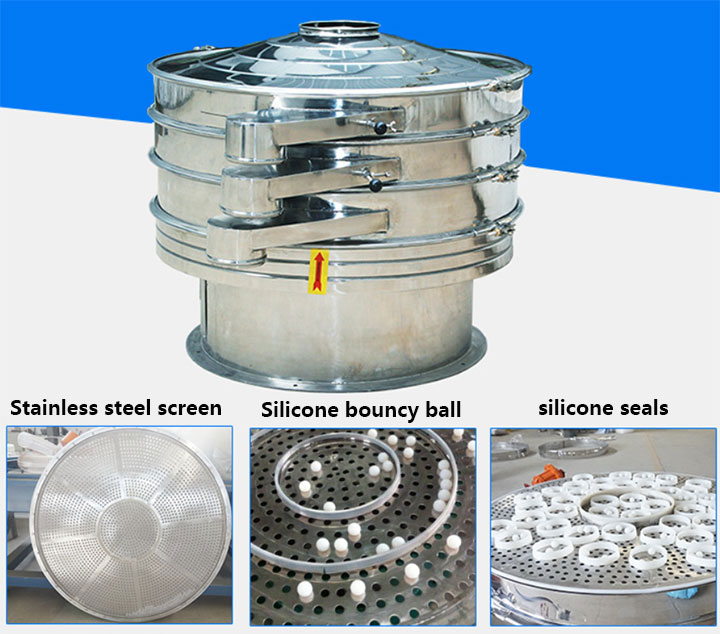
Standard applications utilize contact parts made of SS304. However, for corrosive chemicals or strict food-grade processing, upgrading to polished SS316L is essential to safeguard product purity. In our experience, SS316L offers 3x longer corrosion resistance in acidic environments compared to SS304.
Elastomer Seals: Silicone, EPDM, or Viton?
Fine powders and liquids require robust sealing profiles. Choosing the right elastomer—such as FDA-rated Silicone (for food/dry powder), EPDM (for water-based slurries), or Viton (for aggressive solvents)—minimizes the risk of material leakage and maintains proper pressure balances within the system.
Vibratory Separator Setup: Dry Powder vs. High-Viscosity Slurry Configurations
A vibratory separator operates best when it is optimized for the specific application; its internal configuration typically adapts to the physical state of your material. Processing dry powders involves a fundamentally different mechanical approach than straining high-viscosity liquids.
Dry Powder Processing: Anti-Static and De-Blinding Kits
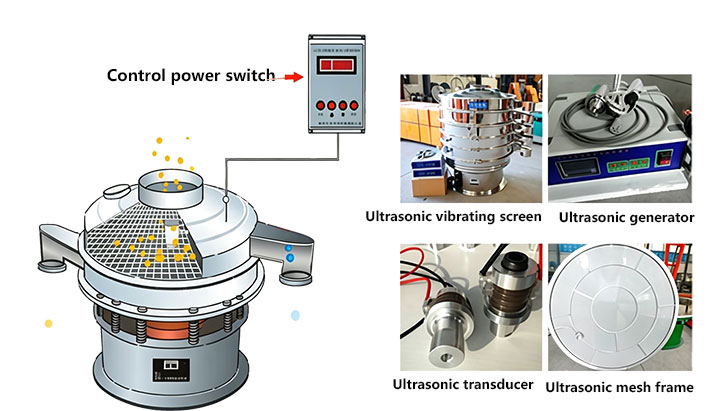
When routing dry powders through the system, engineers frequently account for static electricity, ambient humidity, and air entrapment. In these scenarios, integrating lightweight polymer bouncing balls or ultrasonic frequencies helps disrupt surface tension, allowing fine particles to pass through the mesh smoothly. Ultrasonic kits can reduce mesh blinding incidents by up to 85% for sub-100-mesh powders.
Slurry and Liquid Straining: High-Vertical Splash Dynamics
Conversely, straining liquids and slurries requires managing heavy material weight and viscous drag. Wet applications typically leverage high-power motors with weighted flywheels configured for a high vertical splash angle, which helps direct fluids through the screen quickly while discharging oversized solids.
Technical Selection Matrix for Common Material States
| Material State | Primary Challenge | Recommended Cleaning Kit | Recommended MOC & Seal | Optimal Lead Angle |
|---|---|---|---|---|
| Fine Dry Powders (e.g., Flour, Spices) | Static Clumping & Blinding | Bouncing Balls / Ultrasonic Kits | SS316L + FDA Silicone | 15° - 25° |
| Viscous Slurries & Paints | Heavy Weight & Viscous Drag | High-Vertical Splash Flywheels | SS304/316L + Viton Seals | 40° - 50° |
Sizing Your Vibratory Separator: Diameter and Multi-Deck Configurations
Selecting a round vibratory separator also involves matching the machine's physical footprint with your plant's spatial constraints and hourly volume requirements. Equipment diameter and the number of screen decks are two interdependent variables that scale your operational capabilities.
Diameter vs. Throughput Capacity
High-volume applications require wider diameters (e.g., 48-inch or 60-inch units) to allow material sufficient time to spread out, ensuring efficient stratification across the mesh before reaching the discharge spout. For reference, a 60-inch unit typically offers 1.8x the screening area of a 48-inch unit.
Single-Deck vs. Multi-Deck Screening
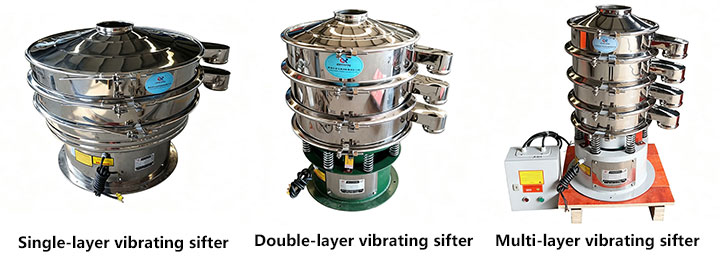
Deciding between single and multi-deck units depends on how many material fractions you need. Multiple screen decks stacked vertically allow for the separation of up to five distinct particle fractions simultaneously. However, cross-referencing vertical space and material feeding heights is highly recommended to maintain sufficient maintenance clearance.
Troubleshooting Production Bottlenecks with Your Vibratory Separator
Even the most robust production lines can encounter operational deviations. When output drops or product quality fluctuates, troubleshooting usually points back to three common screening challenges.
Resolving Screen Blinding Effectively
When sticky or near-size particles wedge into the openings, mechanical cleaning systems are essential. Implementing options such as bouncing balls or ultrasonic de-blinding kits helps reduce mesh blockage without damaging the screen wires.
Preventing Cross-Contamination Risks
Regular maintenance checks are vital when degraded seals or worn screening surfaces allow oversized particles to mix into final batches. Routine inspection of the MOC integrity and using properly rated food-grade or chemical-grade elastomers limits this risk.



 Email
Email