Your location is: Home > News Center > How to Choose Between SUS304 and SUS316L Stainless Steel for Chemical Sifters & Filters

How to Choose Between SUS304 and SUS316L Stainless Steel for Chemical Sifters & Filters

The Real Cost of Material Failure in Chemical Sieving Operations

In chemical processing lines, choosing a sifter screen isn't just about baseline metal durability—it is about avoiding catastrophic batch contamination and unplanned downtime. When incorrect stainless steel grades are deployed in industrial sieves, the failure rarely announces itself gently; it manifests as localized pitting, structural micro-cracks, and sudden screen wire breakage.
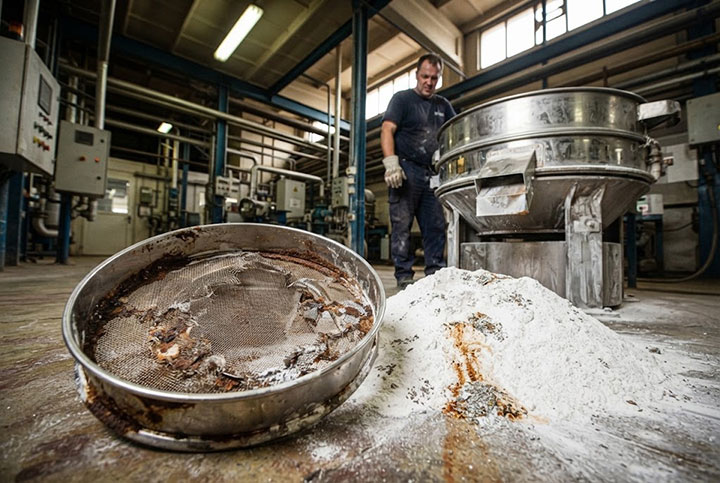
Industrial documentary photo showing a ruptured stainless steel sifter screen and contaminated chemical powder on a factory floor, indicating material failure.

The financial fallout of material degradation in chemical sieving typically involves:

  • Batch Scraping: Metallic particle shedding or rust leeching can instantly contaminate tons of fine chemical powders, leading to total product rejection.
  • Unplanned Line Stoppages: Replacing a ruptured sifter net mid-production halts downstream packaging and processing, costing thousands of dollars per hour in lost output.
  • Premature Equipment Replacement: Continuous corrosive wear forces premature reinvestment in brand-new sifter assemblies rather than routine maintenance.

Understanding the true operational risk sets the stage for a calculated, engineering-first material selection between SUS304 and SUS316L.

Why Molybdenum and the "L" Grade Define Chemical Resilience

The line separating standard austenitic performance from harsh chemical durability lies deep within their microscopic alloying structure. While both SUS304 and SUS316L share chromium-nickel foundations, their behavioral differences under chemical exposure are dictated by two specific metallurgical factors:
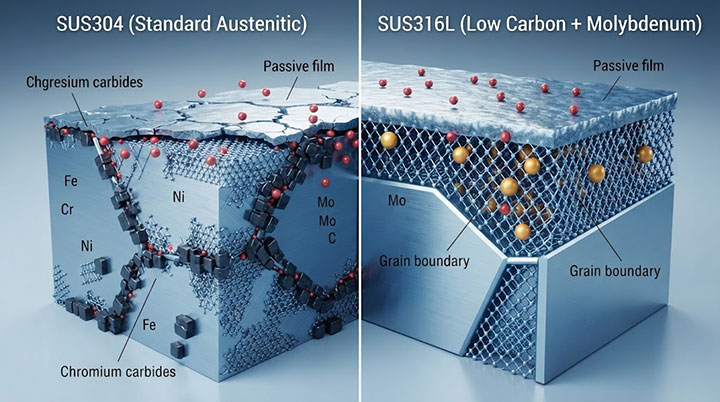
Microscopic comparison of SUS304 and SUS316L microstructure showing Molybdenum effect and intergranular corrosion resistance.

  • The Molybdenum Factor: SUS316L incorporates 2% to 3% of molybdenum (Mo). This transition metal acts as an active chemical shield, drastically increasing resistance against chloride ions, sulfur compounds, and aggressive industrial solvents that instantly attack baseline stainless grades.
  • The "L" Grade Advantage (Low Carbon): The designation "L" stands for low carbon (maximum 0.03%). During high-frequency sifter screen manufacturing—specifically mesh weaving and frame welding—controlled low carbon content prevents chromium carbide precipitation along grain boundaries, eliminating intergranular corrosion risks.

For chemical sifter operators, this means SUS316L maintains its passive protective film intact even when subjected to thermal stress and aggressive liquid-solid separation tasks.

Sifter Screen Performance Under Load

In industrial vibrating sifters and tumbler screens, material selection cannot be viewed in a static laboratory environment. Sifter meshes operate under relentless mechanical tension, centrifugal force, and high-frequency particle impact, which fundamentally alters how chemical exposure affects the metal.

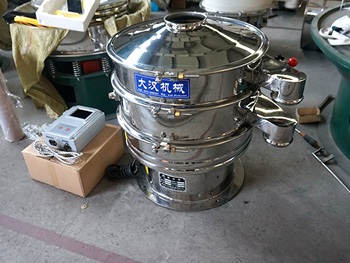
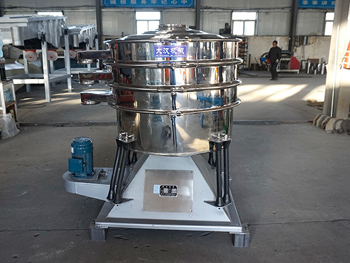
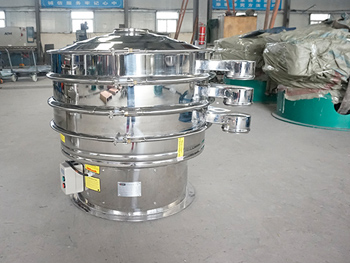
See Dahan Machinery's vibrating sifter in action—precision engineering for demanding chemical processing environments.

  • Stress Corrosion Cracking (SCC): Chemical media combined with sustained mechanical tensile stress creates micro-fissures in vulnerable grades. Molybdenum-enhanced SUS316L absorbs cyclic fatigue much more reliably in damp, saline, or acidic powder streams.
  • Mesh Aperture Integrity: Under continuous abrasive rubbing by dense chemical granules, standard 304 wires thin out faster at intersection points. Once thinning initiates, localized chemical attack accelerates hole widening and calibration drift.

Evaluating how physical motion accelerates chemical interaction ensures your sifter screens maintain exact particle size separation over extended operational cycles.

Environmental Audit: Mapping Chemical Aggressiveness to Stainless Grades

Selecting between SUS304 and SUS316L requires a precise environmental audit of your specific chemical media. Not all chemical powders or liquid slurries impose the same level of corrosiveness on sifter contact parts.
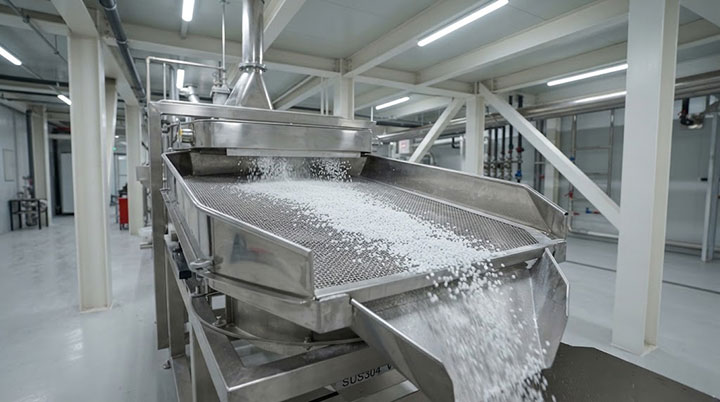
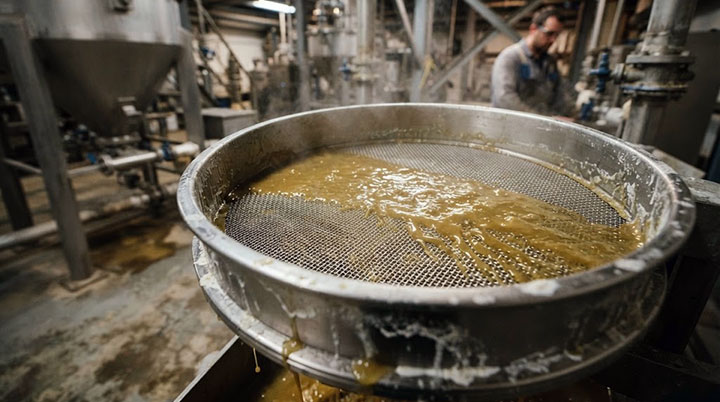
SUS304 stainless steel vibrating sifter processing dry chemical powder in a clean plant SUS316L sifter screen handling corrosive chemical slurry in a wet industrial environment
  • When SUS304 Excels: Ideal for dry, non-hygroscopic chemical powders, plastic resins, baseline fertilizers, and mild mineral processing where chloride ions and aggressive acids are absent. It provides optimal mechanical strength and cost-efficiency.
  • When SUS316L Becomes Mandatory: Essential for wet chemical sieving, saline solutions, fine pharmaceutical intermediates, and bleaching agents. Even trace amounts of chloride (above 25 ppm) in moisture-laden screening environments necessitate the upgrade to 316L to prevent pitting corrosion.

Matching material specifications directly to your working environment eliminates over-engineering while safeguarding against catastrophic premature failures.

Total Cost of Ownership (TCO): Is 316L Actually More Expensive for Sifter Upgrades?

Plant managers often hesitate to specify SUS316L due to its higher initial procurement cost compared to SUS304. However, evaluating material selection through a Total Cost of Ownership (TCO) lens reveals a completely different financial picture in heavy-duty chemical processing.

See how ultrasonic technology handles high-precision chemical materials, ensuring compliance with strict pharmaceutical standards.

  • Initial vs. Operational Expense: While 316L raw material commands a price premium, the screen mesh itself typically accounts for only a fraction of total production losses when premature failures occur.
  • Multiplying Service Life: In corrosive media environments, 316L sifter screens outlast 304 alternatives by several factors, effectively slashing recurring replacement labor and purchasing overhead.
  • Eliminating Downtime Costs: Avoiding unexpected line shutdowns for screen swapping preserves hourly output value, making the marginal price difference of 316L a highly profitable investment.

Smart material budgeting balances upfront wire mesh costs against long-term equipment reliability and continuous production uptime.

Custom Fabrication Standards for Corrosive Chemical Sifters

Selecting the right stainless steel grade is only half the battle; the quality of fabrication and finishing dictates how effectively a sifter screen withstands aggressive chemical environments. Incomplete finishing or improper welding can compromise even the highest-grade material.
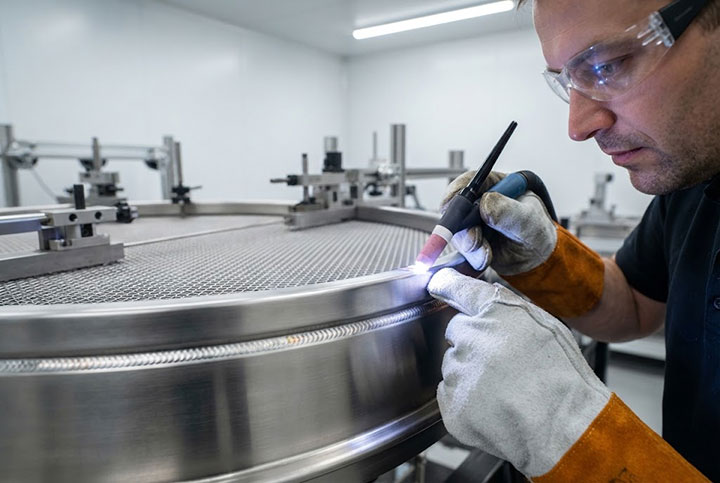
Precision TIG welding process for hygienic stainless steel sifter frame fabrication

  • Electropolishing and Passivation: Advanced surface treatments significantly minimize microscopic surface imperfections and free iron particles, accelerating the formation of a dense, self-healing chromium oxide barrier.
  • Precision Tensioning and Weaving: Industrial sifter frames require exact wire tensioning to prevent localized mechanical fatigue and aperture distortion under high-frequency vibration.
  • Hygienic Seam Integrity: Specialized laser or TIG welding prevents crevice corrosion zones where chemical residues and moisture can pool and trigger localized pitting.

Engineering excellence during fabrication ensures that your chosen stainless steel mesh delivers its maximum corrosion resistance on the factory floor.

Custom Material Compatibility Assessment

Navigating material selection for complex chemical screening lines requires deep application experience and rigorous testing. At Dahan Machinery, we do not believe in a one-size-fits-all approach; every industrial sifter, tumbler screen, and filter setup is engineered to match your unique production parameters.
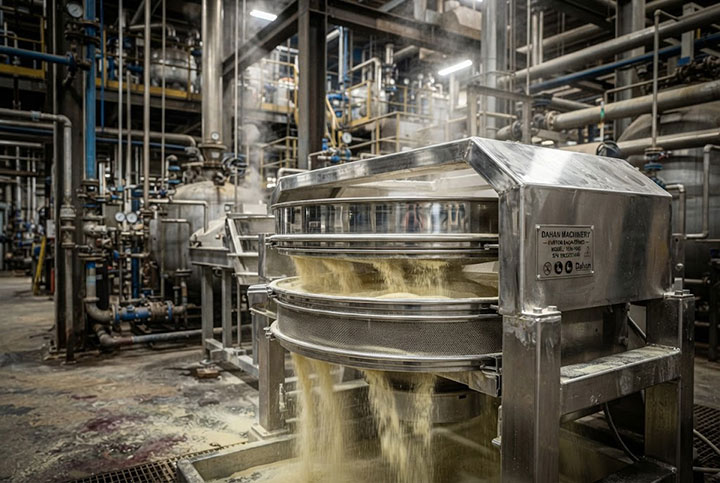
Industrial documentary photo of a custom-engineered Dahan Machinery stainless steel tumbler screening machine actively operating in a complex chemical processing plant. The machine is sieving powder, with industrial piping and steel structures visible in the background, emphasizing a real working environment.

Our engineering team supports your material decision-making through a structured consultative process:

  • Chemical & Physical Analysis: Reviewing your powder or liquid pH values, moisture levels, temperature ranges, and particle distributions.
  • Custom Material Certification: Providing full Material Test Reports (MTR) and mill compliance documentation for absolute traceability.
  • Tailored Sifter Engineering: Configuring frame designs, mesh counts, and surface passivation treatments tailored specifically to your processing environment.

Ready to optimize your chemical processing efficiency? Contact our engineering specialists today for a professional material compatibility evaluation and custom equipment quotation.

Engineering FAQs: Resolving Material Dilemmas for Industrial Sifters

When specifying or maintaining industrial sifter screens, plant engineers often encounter specific material dilemmas. Here are answers to common questions regarding SUS304 and SUS316L applications:

Can SUS304 sifter screens be used safely in fertilizer or dry salt processing?

For dry, non-hygroscopic chemical fertilizers, SUS304 usually performs adequately. However, if moisture is present—creating even trace chloride solutions above 25 ppm—SUS304 is prone to pitting, making SUS316L the safer, long-term choice.

How can our plant team verify whether a delivered sifter screen is genuine SUS316L?

While visual inspection is difficult due to identical metallic sheens, certified manufacturers provide Material Test Reports (MTR) with heat numbers. Additionally, chemical spot testing kits (molybdenum reagent tests) or portable XRF spectrometers can instantly confirm alloy composition on-site.

Does welding or mesh stretching degrade the corrosion resistance of 316L?

Improper high-temperature welding can cause carbide precipitation in standard steels. However, because SUS316L features controlled low carbon content (max 0.03%), it resists intergranular corrosion even after precision frame welding and tensioning.


Friday August-21 2026  13:47:07
Resources
Contact Us

Whatsapp:+86 15236742901

Email:sale@xxdahan.com

Address:China,Yanjin county forest park gate to the west 1000 meters north road.