


Custom Bulk Material Screening Machine for Mining serves the classification, impurity removal, and dewatering processes in mineral crushing circuits. Driven by an exciter, the screen box performs linear or elliptical motion, enabling layer-by-layer screening of heavy minerals. Processing capacity ranges from 50 to 1200 tons per hour, with mesh opening sizes covering 0.5 mm to 100 mm and 1 to 4 deck configurations available. The structure handles iron ore, copper ore, gold ore, and granite with particle sizes under 300 mm. Side plates are constructed via weld-free cold bending, paired with polyurethane or manganese steel screen panels to complete coarse and fine particle separation.
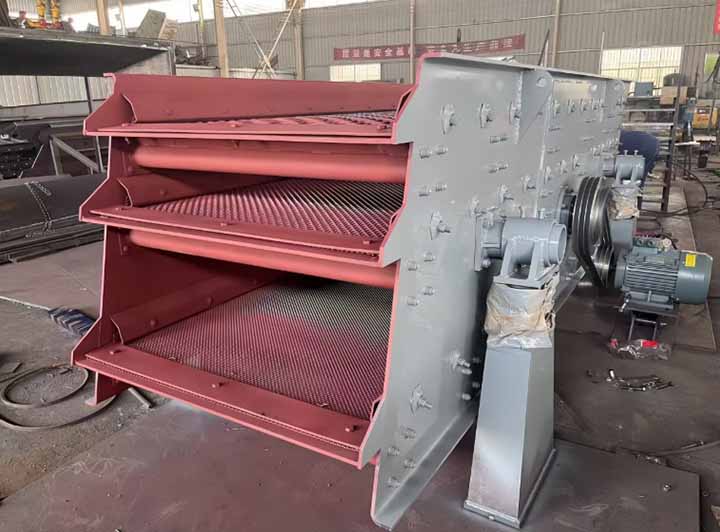
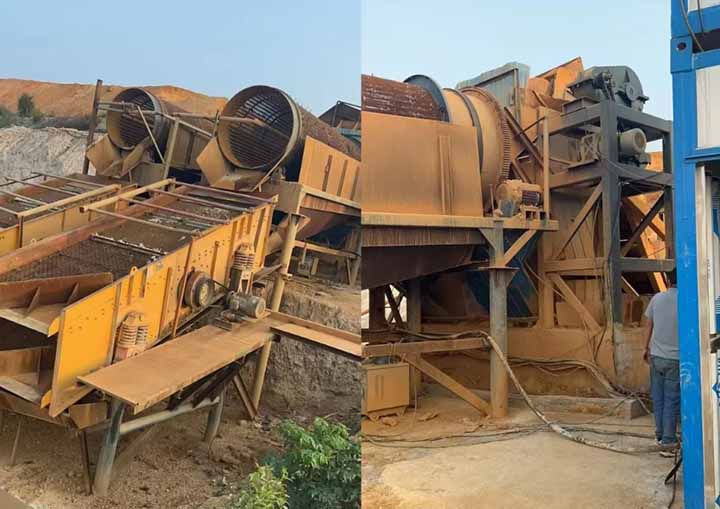
Dry and wet mining operations face harsh conditions, including high material hardness, fluctuating moisture levels, and heavy impact loads. Impact from falling rocks often leads to screen frame cracking, while sticky, clay-rich minerals frequently cause aperture blinding.
16Mn wear plates or rubber impact pads are installed at the feed inlet to reduce direct force on the steel frame and absorb the kinetic energy of falling large boulders.
Molded polyurethane anti-blinding panels with a 35%-45% open area are selected. Their elastic deformation sheds adhering materials, reducing manual cleaning downtime.
For wet processing, spray pipe systems with water pressure controlled at 0.2-0.3 MPa and splash guards are added to achieve clay stripping and tailings dewatering.
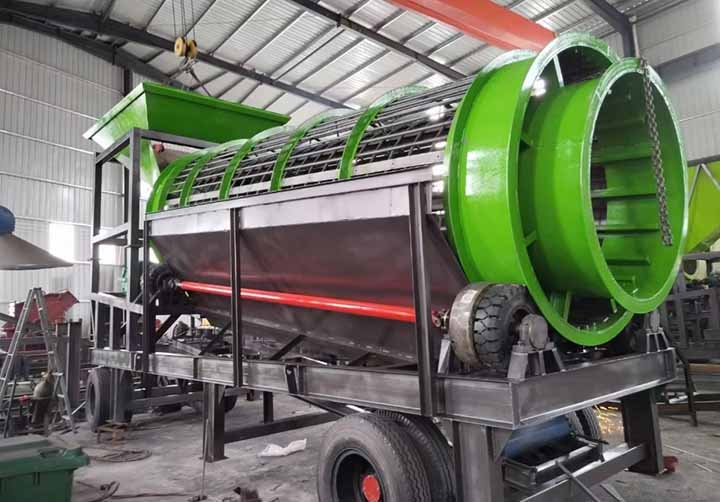
Structural fabrication and power transmission design dictate the operational lifespan of the equipment in harsh mining environments:
Side plates utilize Q345B steel plates connected with huckbolts, avoiding heat-affected zones and stress concentration caused by welding, which prevents fatigue fracture.
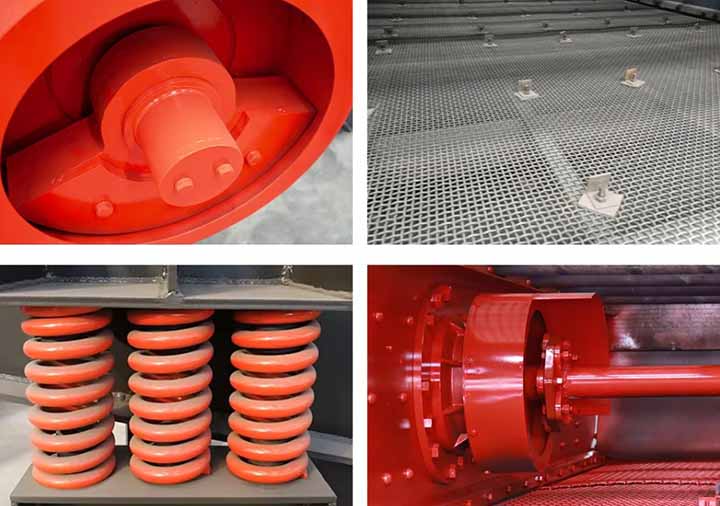
Exciters feature a dual-shaft eccentric block design paired with SKF bearings. Lubrication uses thin oil circulation or high-pressure grease injection, lowering bearing operating temperatures.
Deck installation angles are adjustable from 0 to 25 degrees to suit different material flow velocities. Drive transmissions utilize tire couplings to block reverse vibration transfer to the motor. Motor power ranges from 11kW to 75kW, meeting IP55 protection standards, with left- or right-hand motor placement options.
| Parameter | Standard Range | Custom Options |
| Processing Capacity (TPH) | 50 - 1200 t/h | Customized based on material specific gravity & capacity requirements |
| Feed Size | ≤ 300 mm | Heavy-duty receiving hopper & reinforced lining at inlet |
| Mesh Opening Size | 0.5 - 100 mm | Woven wire, punched plate, grizzly bars, or polyurethane panels |
| Number of Decks | 1 - 4 Decks | Single, double, triple, or quadruple deck box designs |
| Screening Area | 5 - 30 m² | Proportional length-to-width ratio adjustments for site limitations |
| Amplitude & Frequency | 6 - 12 mm / 800 - 1200 rpm | Vibration parameters adjusted via adjustable eccentric blocks |
| Protection Rating | Standard / IP55 | IP65Ex explosion-proof motors and control cabinets for underground mines |
The handled material was hematite with a density of 2.8 t/m³. The original line experienced panel wear cycles of 15 days at a 25 mm separation size. After upgrading to custom double-layer polyurethane panels and reinforced support beams, the panel replacement cycle extended to 180 days, with single-line throughput maintained at 450 tons per hour.
To tackle clay-rich copper ore, three high-pressure spray bars were installed. Post-screening and dewatering, tailings moisture content dropped to 12%, meeting the feed requirements for the downstream flotation process.
All steel plate cutting is executed via CNC plasma cutters. After forming, the parts undergo full-surface shot blasting to achieve a Sa2.5 surface roughness standard.
Side plate welds undergo ultrasonic non-destructive testing (NDT) to inspect for internal porosity and slag inclusion defects.
Following exciter assembly, a 72-hour continuous no-load test run is conducted on the test stand to monitor bearing temperature rise (kept below 35°C) and vibration noise (controlled below 85 dB). The factory operates under ISO9001 quality management, with shipments accompanied by CE certification and material inspection reports.
Step 1: Provide Ore Parameters
Supply details including material name, loose bulk density (t/m³), maximum feed size, moisture content, and required output separation sizes.
Step 2: Define Operating Conditions
Provide target hourly throughput tonnage, on-site installation space dimensions, power voltage levels, and explosion-proof requirements.
Step 3: Engineering Scheme Design
Engineers generate 2D CAD layout drawings and 3D models based on provided data, verifying inlet and outlet interface locations.
Step 4: Confirm Drawings & Quotation
Finalize screen plate materials, motor brands, and wearing parts lists before generating the production order.
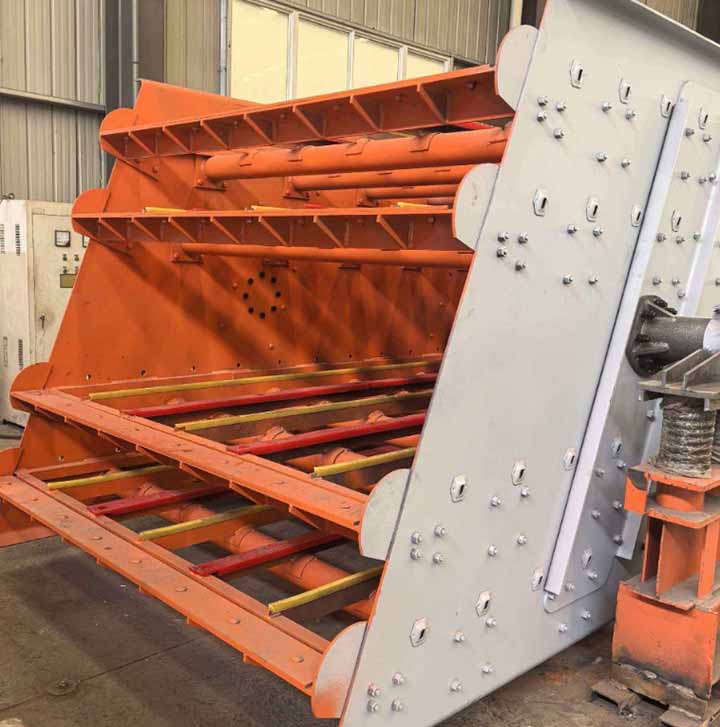
Self-cleaning ball deck panels, high-frequency micro-vibration systems, or anti-blinding elastic polyurethane panels can be selected to shatter clay agglomerates using self-excited rod vibrations.
Wearing parts such as bearings, springs, and screen panels use standardized interface dimensions. A 1-2 year spare parts package is included with the shipment, with drawings labeling standard national and international interchangeable models.
Support bases and drive shafts feature symmetrical structural designs. Left- or right-hand drives can be customized according to drawings prior to factory departure, with discharge hopper angles customizable from 0 to 30 degrees.


Address:China,Yanjin county forest park gate to the west 1000 meters north road.


 Online Chat

 Email