


In large-scale bulk material handling processes, raw materials frequently stall at the discharge outlet of storage silos or collection hoppers due to heavy gravitational compaction. This phenomenon causes intermittent supply lines downstream, or results in severe material bridging when particles exhibit moisture or irregular sizing. The Electromagnetic Vibratory Feeder for Hopper Feeding is installed directly beneath the hopper discharge opening, utilizing high-frequency, micro-amplitude vibrations to break internal material cohesion and transform stagnant ores, sand, gravel, coal, or chemical powders into a continuous, flowing stream.
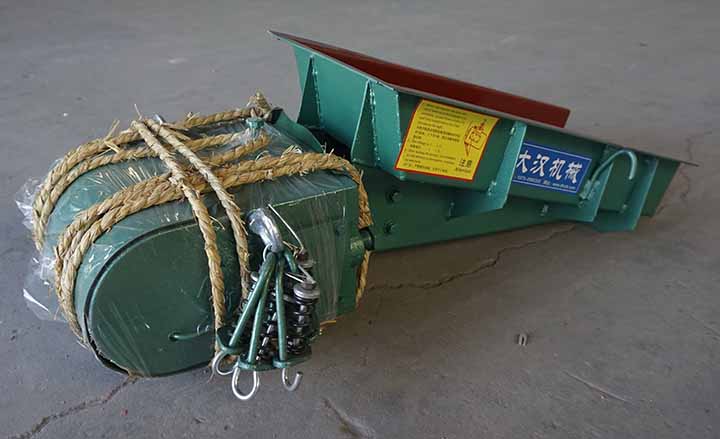
During actual production, site operators frequently face the dilemma where the feeding speed cannot match the requirements of the downstream crushers or micro-batch weighers. When the feeding rate is too fast, receiving equipment experiences overload tripping; when too slow, the entire processing line runs idle. The capacity of this equipment features a wide design span. Small-scale models can regulate the delivery volume to around 0.5 tons per hour for micro-additive dosing processes. Meanwhile, heavy-duty industrial versions reach delivery capabilities of several hundred tons per hour to meet the continuous discharge demands of large ore-beneficiation plants and quarries. By altering the output voltage of the matching control box, the material flow velocity and hourly throughput change within milliseconds.
This equipment demonstrates practical operational benefits in its structural engineering and daily running parameters:
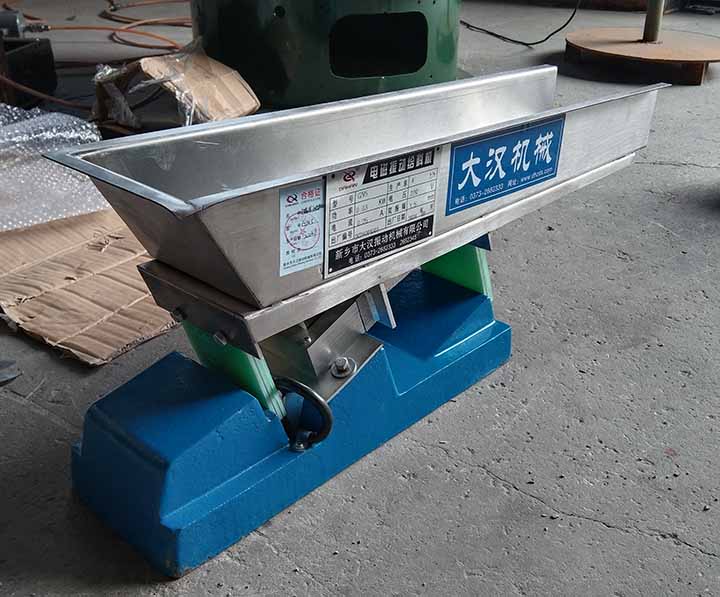
The equipment is engineered based on the two-body near-resonance principle. The entire machine consists of the feeding trough (the first mass), the electromagnetic exciter containing an armature and coils (acting as the second mass), and a set of leaf springs connecting both components.
When the control box introduces alternating current processed by half-wave rectification, the pulse electromagnetic force generated by the coils pulls the armature periodically. During the energized half of the cycle, the magnetic pull draws the trough backward and downward, causing the leaf spring assembly to deflect and store elastic potential energy. During the de-energized half of the cycle, the magnetic pull vanishes, and the leaf spring assembly releases the energy, snapping the trough forward and upward.
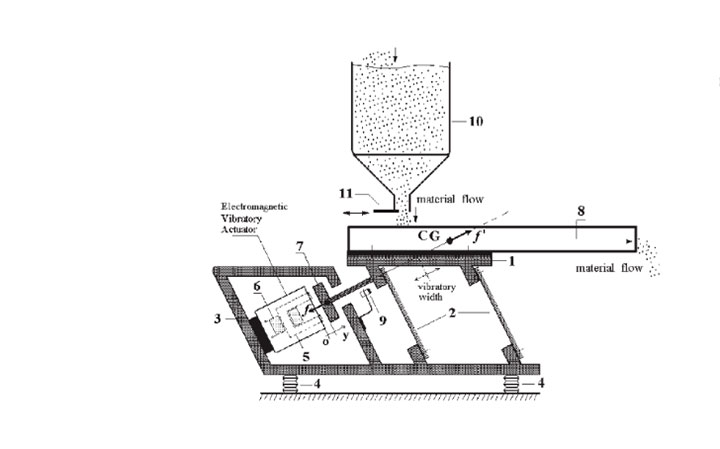
This continuous reciprocating movement occurs at a frequency of 3000 cycles per minute. Because the vibration direction maintains a specific angle of inclination relative to the horizontal plane (designed at 20° to 25°), the material inside the trough is thrown upward and forward by the micro-amplitude, high-frequency motion. The particles follow parabolic trajectories, executing small hopping movements. Countless continuous jumps accumulate to form a macroscopically continuous material stream moving forward.
The following table lists the technical parameters of standard models. Users should cross-reference the trough dimensions and required hourly production rates with their specific hopper opening sizes during equipment selection:
| Model | Trough Width (mm) | Trough Length (mm) | Hourly Capacity (t/h) | Max Feeding Size (mm) | Power (kW) | Installation Slope (°) |
| GZ1 | 150 | 350 | 5 | 40 | 0.06 | 0 or -10 |
| GZ2 | 200 | 500 | 10 | 50 | 0.15 | 0 or -10 |
| GZ3 | 300 | 700 | 25 | 60 | 0.20 | 0 or -10 |
| GZ4 | 400 | 900 | 50 | 80 | 0.45 | 0 or -10 |
| GZ5 | 500 | 1200 | 100 | 100 | 1.50 | 0 or -10 |
| GZ6 | 700 | 1400 | 200 | 150 | 3.00 | 0 or -10 |
International Trade Commodity Code Marking:
HS Code: 8474100000 (Applicable to vibrating feeding and screening machinery)
When configuring discharge devices for hopper outlets, design engineers frequently weigh choices between a Vibrating Feeder and an Apron Feeder. The mechanical configurations and operational parameters of the two devices possess clear physical boundaries:
For processing medium-grain sizes, situations requiring frequent adjustments of discharge rates, or hopper discharge systems interlocking with subsequent weighing processes, the electromagnetic vibratory feeder is the appropriate choice. For open-pit mining operations dealing with raw ore chunks directly beneath the first-stage primary crushing hoppers, an Apron Feeder must be selected.
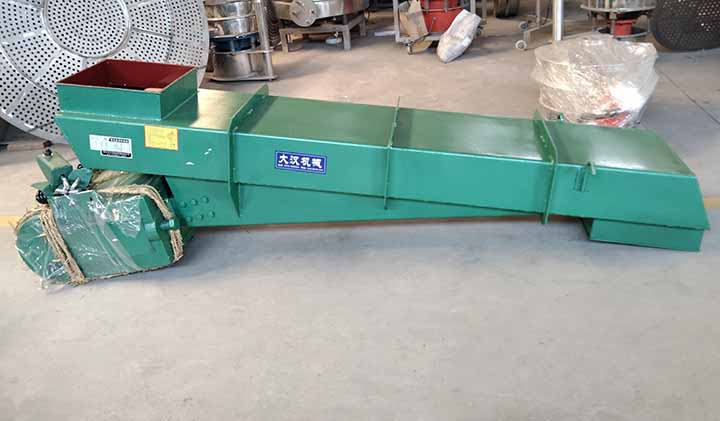
A: On B2C cross-border e-commerce platforms like Amazon, users can generally only find small or micro-scale vibratory feeders intended for laboratory testing. Industrial-grade hopper discharge feeders belong to heavy mining and industrial manufacturing equipment categories. They require custom engineering calculations based on the actual geometric dimensions of the hopper, the bulk density of internal materials, moisture content, and chemical traits. Industrial equipment requires direct consultation with professional industrial manufacturing suppliers to verify specific flange connection dimensions, suspension mounting points, and factory voltage requirements for matching control systems.
A: A "bird hopper feeder" refers to a small, gravity-fed product placed in backyards to feed birds, belonging to gardening or pet supply categories. It relies purely on material weight to drop seeds into a base tray, containing no electrical drive elements, electromagnetic coils, or mechanical vibration mechanisms. This stands completely apart from the heavy industrial electromagnetic vibratory feeders discussed in this article, which process tons of bulk solid raw materials within mining, metallurgy, building material, and chemical processing lines.
A: The selling price of an industrial electromagnetic vibratory feeder varies based on configuration discrepancies. Small-scale units for laboratory use or micro-additive dosing generally range between $400 and $1,000 USD. For mid-to-large models handling industrial hopper discharge (such as units with hourly outputs of 50 to 200 tons), the base price for a standard carbon steel configuration ranges between $2,500 and $8,000 USD. If the trough requires thickened abrasion-resistant liner plates, full stainless steel materials, or if the control box demands specific remote communication interfaces (such as Modbus protocols), the final manufacturing price will shift upward due to adjustments in raw material and electrical component costs. Users need to provide material parameters to receive precise ex-factory price breakdowns.
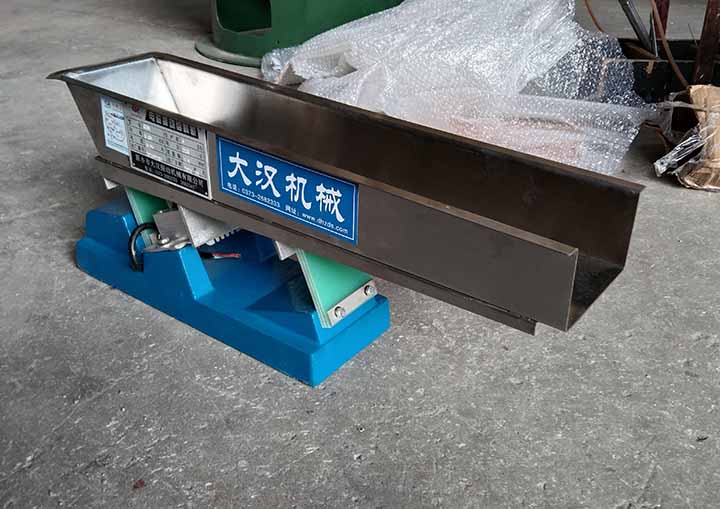
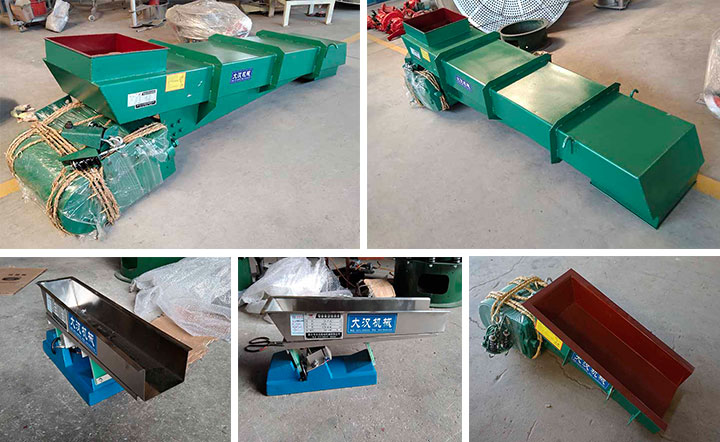
The Electromagnetic Vibratory Feeder for Hopper Feeding is designed to resolve material accumulation and bridging issues occurring at hopper discharge mouths during bulk handling operations. It bypasses the complex transmission chains found in traditional mechanical feeders, utilizing micro-amplitude, high-frequency near-resonance produced by an electromagnetic exciter to push solid particles out of the discharge opening. During detailed model selection and system integration, technical personnel should evaluate hourly capacity requests, material abrasiveness, and control system compatibility to verify the trough sizing and power ratings listed in the technical specifications table, selecting either suspended or floor-mounted installation setups depending on structural field restrictions.


Address:China,Yanjin county forest park gate to the west 1000 meters north road.


 Online Chat

 Email