


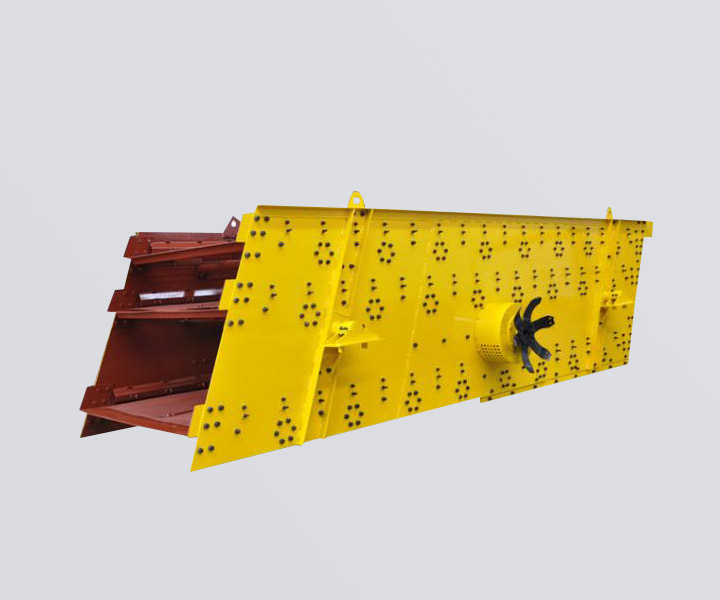
An elliptical vibrating screen is an industrial screening machine that uses an elliptical motion to separate bulk materials by particle size. The combined horizontal and vertical movement helps convey material across the screen surface while allowing smaller particles to pass through the openings. It is used for sizing and classifying materials such as crushed stone, ores, coal, and other bulk solids. The appropriate screen model depends on feed size, moisture content, required capacity, separation size, and screen media configuration.
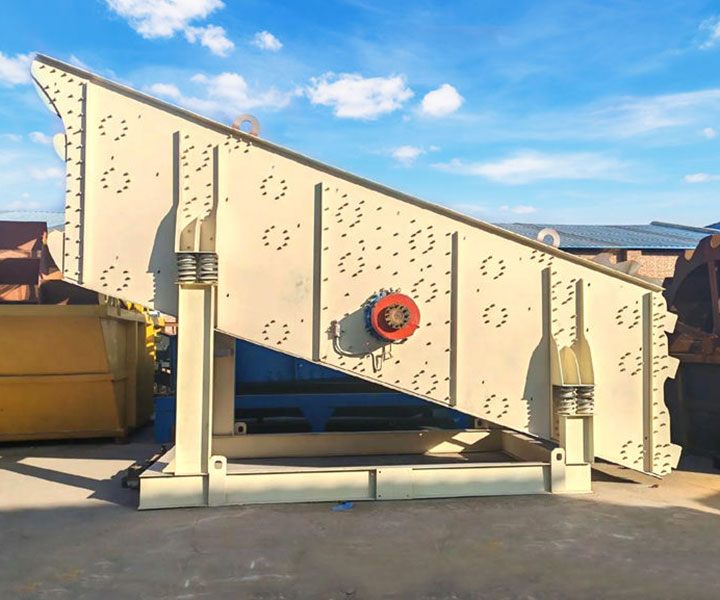
Compare the available models by screen size, feed particle size, processing capacity, and motor power. Actual throughput depends on material properties, moisture content, feed rate, required separation size, and screen configuration.
| Model | Screen Size (mm) | Screen Decks | Max. Feed Size (mm) | Capacity (t/h) | Motor Power (kW) |
|---|---|---|---|---|---|
| DH-ES1848 | 1800 × 4800 | 1–3 | ≤200 | 100–250 | 18–22 |
| DH-ES2160 | 2100 × 6000 | 1–3 | ≤250 | 180–380 | 30–37 |
| DH-ES2470 | 2400 × 7000 | 1–3 | ≤300 | 250–550 | 45–55 |
Need help selecting a model? Share your material type, feed size, target screening size, required capacity, and available installation space. Our team can recommend a suitable configuration based on your operating requirements.
An elliptical vibrating screen is used to classify bulk materials by particle size in demanding screening operations. The suitable configuration depends on material properties, feed size, moisture content, target separation size, and required throughput.
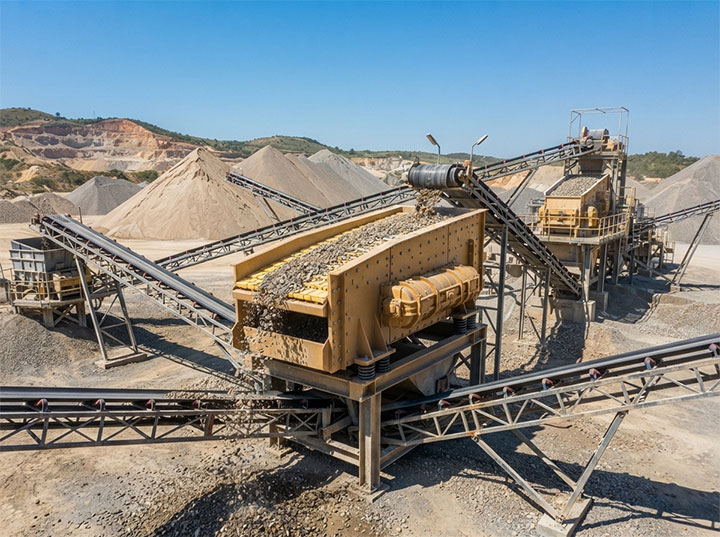
An elliptical vibrating screen is designed to balance material transport and particle separation. Its performance depends on the feed characteristics, screen configuration, and operating parameters.
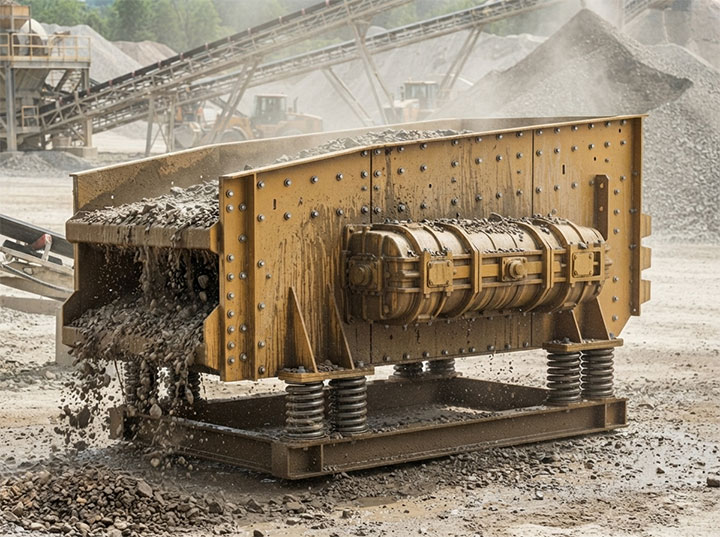
Efficient Material Conveying: Elliptical motion helps move bulk material along the screening surface while supporting particle separation.
Reduced Risk of Screen Blinding: The continuous vibrating motion helps keep material moving across the deck. Suitable screen media and operating settings are also important when handling damp or difficult-to-screen materials.
Consistent Particle Classification: With the correct mesh size, deck arrangement, and feed rate, the screen can separate material into the required size fractions.
Flexible Screening Configuration: Different screen sizes, deck numbers, and screen media options can be selected according to feed size, target capacity, and separation requirements.
The triple-shaft exciter drives the screen box to produce elliptical vibration. This motion combines movement along and across the screen surface, helping transport bulk material while allowing particles to separate according to the screen openings.
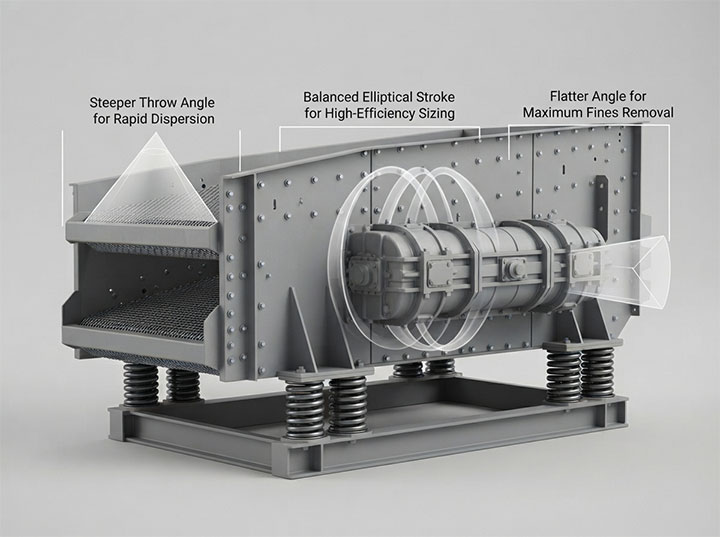
Material Feeding: Material enters the screen and spreads across the screening surface as the vibrating motion moves it forward.
Particle Stratification: As the material travels along the deck, smaller particles can move through the gaps between larger particles and reach the screen openings.
Screening and Discharge: Particles smaller than the selected openings pass through the screen, while oversize material continues toward the discharge end.
The screening result depends on factors such as vibration parameters, feed rate, material moisture, particle size distribution, and screen media. Properly selecting these factors helps achieve the required separation and material flow.
The structure and component configuration of an elliptical vibrating screen affect its operation, maintenance requirements, and suitability for different materials. Key components can be selected according to the screening duty and site conditions.
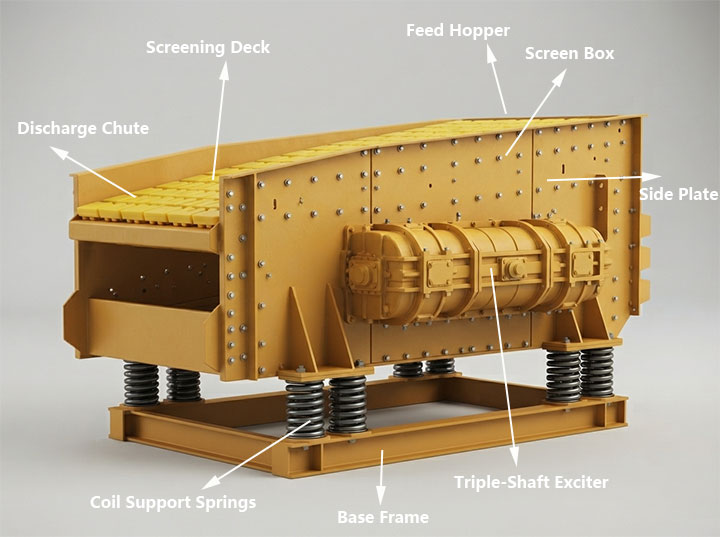
Screen Box: The supporting structure holds the screening decks and withstands the loads generated during operation.
Triple-Shaft Exciter: The exciter generates the elliptical vibration used to convey and separate material across the screen surface.
Spring System: Coil or rubber springs can be selected according to the machine design and installation requirements.
Screen Media: Polyurethane panels or woven wire mesh may be available depending on the required opening size, material characteristics, and wear conditions.
Watch the screening process to see how material moves across the screen deck and how the machine handles the feed during operation. Actual screening results depend on the material properties, feed rate, screen openings, and equipment configuration.
Elliptical vibrating screen configurations can be evaluated according to your material, required throughput, separation targets, and installation conditions. Providing these details helps determine a suitable machine size and deck arrangement.
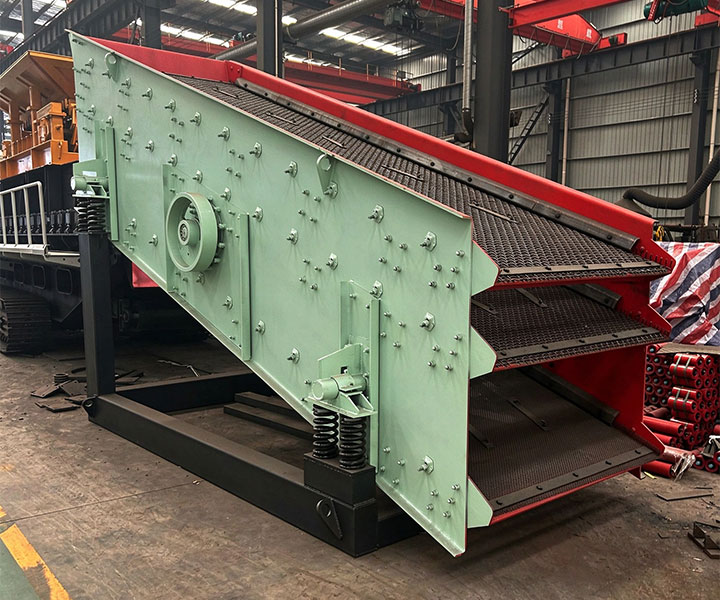
To discuss a suitable configuration, share your material type, feed size, target separation size, required capacity, and installation layout with our team.
Elliptical vibrating screens can be configured for different bulk material screening requirements. The following application types illustrate factors to consider when evaluating a suitable screening solution.
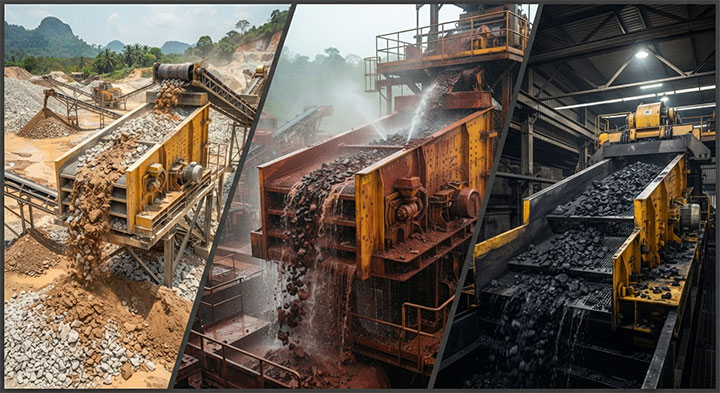
Aggregate Screening: For crushed stone and limestone, model selection should account for feed size, required aggregate fractions, moisture content, and target throughput.
Ore Classification: In mineral processing applications, screen deck configuration and screen media should be selected according to the ore characteristics, particle size distribution, and separation requirements.
Coal Preparation: For coal screening, the equipment layout, feed conditions, and required product sizes should be evaluated alongside available installation space and maintenance access.
Each screening project has different operating conditions. Share your material details, target capacity, separation requirements, and site layout to discuss a suitable configuration.
An elliptical screen moves material along an elliptical path, while a circular screen uses circular motion. The right choice depends on material characteristics and screening requirements.
It can handle certain damp or difficult-to-screen materials, depending on moisture content, material adhesion, and screen media selection.
Consider feed size, required capacity, target separation size, material moisture, and the number of screening decks.
Provide your material type, feed size, required capacity, target screening sizes, and installation dimensions if available.
Looking for an elliptical vibrating screen for your application? Send us your material type, feed size, required capacity, target screening size, and installation requirements. Our team can help evaluate a suitable model and configuration for your project.


Address:China,Yanjin county forest park gate to the west 1000 meters north road.


 Online Chat
 Email