


An industrial particle screening machine is mechanical equipment used for material grading and impurity removal. It utilizes the excitation force of vibrating motors or mechanical tumbling force to separate mixed materials based on particle size. This equipment processes plastic granules, rubber particles, quartz sand, metal powders, chemical fertilizer granules, and resins in dry or wet states. The screening mesh size covers 2 mesh to 500 mesh (particle sizes from approximately 8000 µm to 25 µm), with a single machine's processing capacity ranging from 100 kg/h to 20 t/h, depending on bulk density and mesh specifications.
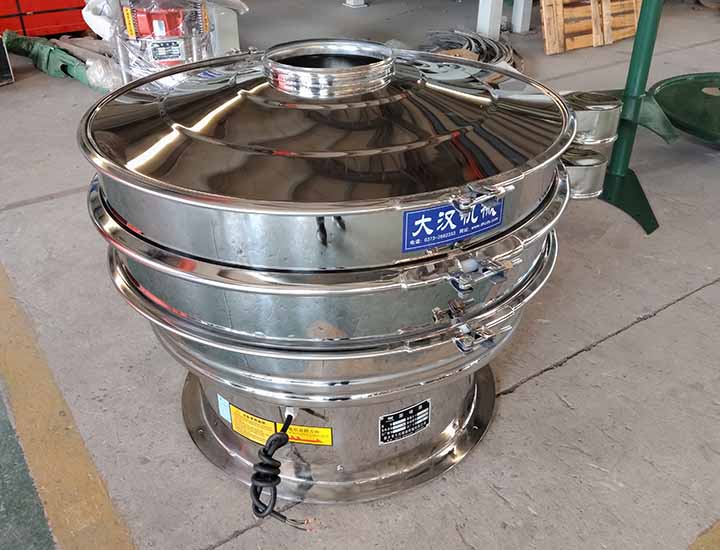
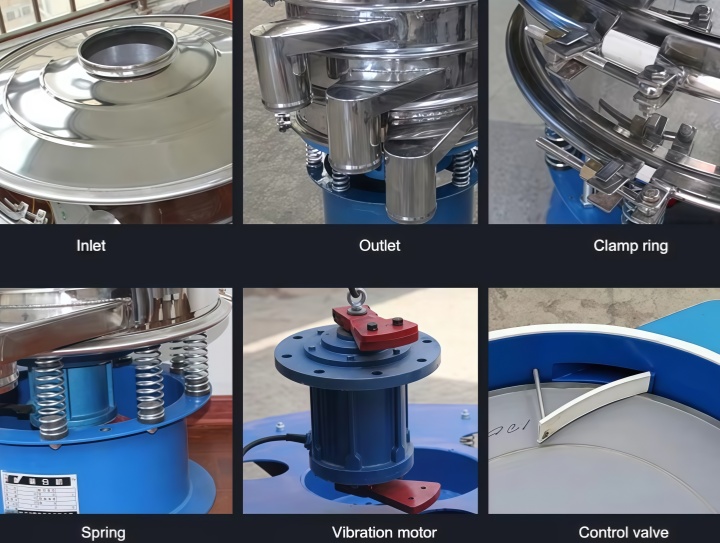
The material contact parts are constructed from 304 or 316L stainless steel, with plate thickness ranging from 3 mm to 8 mm and polished to 240 mesh finish. The screen frame features quick-release clamp fasteners, enabling screen mesh replacement within 5 minutes after loosening bolts. The anti-blinding system is equipped with silicone bouncing balls or a 28 kHz ultrasonic transducer, clearing mesh blockages through continuous impact or high-frequency micro-vibrations. The vibration source uses dual-axis asynchronous vibrating motors with adjustable eccentric blocks to alter material trajectories and retention time on the screen deck. EPOM sealing strips are fitted at all joints to prevent dust emission.
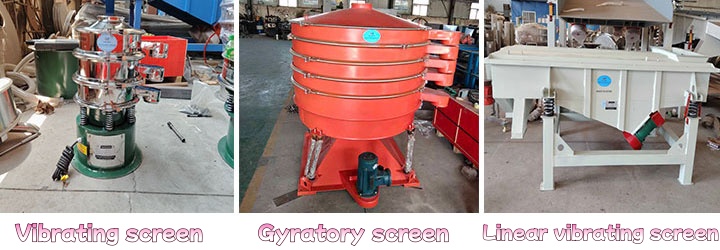
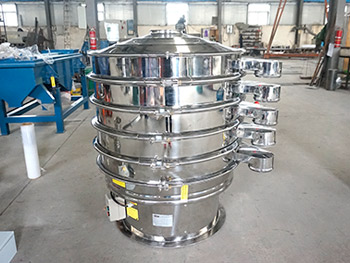
Utilizes three-dimensional motion, causing materials to move in an outward parabolic pattern on the screen surface. Suitable for fine powder and micro-particle grading above 200 mesh. It occupies a small footprint and supports 1 to 5 screen deck layers.
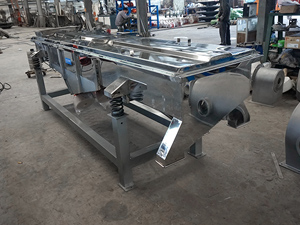
Relies on dual motors counter-rotating synchronously to toss material forward in a straight line. Suitable for large-capacity screening of coarse particles between 2 mesh and 100 mesh. The discharge outlet is located under the front end for easy integration into automated production lines.
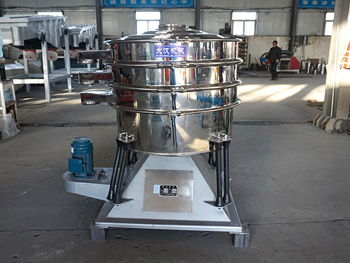
Simulates manual screening motion, with a main axis tilt angle adjustable between 0° and 5°. It exerts low impact on fragile particles (such as activated carbon and pressure-sensitive resins), reducing particle degradation rates.
| Parameter Item | DH-600 Spec | DH-1000 Spec | DH-1500 Spec |
| Screen Diameter | 560 mm | 960 mm | 1460 mm |
| Screen Decks | 1 - 4 Decks | 1 - 5 Decks | 1 - 5 Decks |
| Motor Power | 0.55 kW | 0.75 kW / 1.1 kW | 1.5 kW / 2.2 kW |
| Vibration Frequency | 1440 rpm | 1440 rpm | 1440 rpm |
| Capacity (Quartz Sand) | 0.5 - 1.5 t/h | 1.5 - 4.5 t/h | 4.0 - 10.0 t/h |
| Machine Weight | 220 kg | 410 kg | 780 kg |
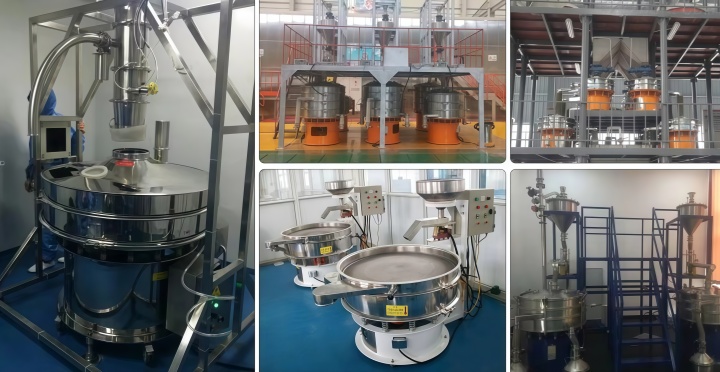
[Plastic Processing / Vietnam] Equipped with a DH-1200-2S double-deck rotary screen, a plastic recycling plant processed PE pellets by eliminating oversized particles (> 4 mm) and fine dust (< 1 mm), reaching a stable output of 2.8 t/h per line. [Mining & Minerals / Turkey] A silica processing facility utilized a DZSF-1030 linear vibrating screen for 93% purity quartz sand, achieving 3-stage grading at 20, 40, and 80 mesh; this setup resolved rapid mesh wear issues and sustained 180 days of continuous operation without screen replacement. [Fertilizer Manufacturing / Indonesia] A compound fertilizer producer deployed a YBS-1800 tumbler screener, maintaining granule breakage below 0.3% while sustaining a high throughput of 12 t/h.
Q1: How to select the proper mesh size based on material characteristics?
A1: Provide D50/D90 particle size distribution data and material sampling photos. Technicians calculate open area ratios and match standard Tyler mesh sizes based on material flowability and bulk density.
Q2: How to inspect and replace damaged screen mesh?
A2: Inspect the discharge outlet. If fine powder appears in the coarse outlet or oversized particles enter the fine outlet, the mesh is damaged. Loosen the outer quick-release clamp, stretch the new mesh tightly, and fasten the bolts to complete replacement within approximately 8 minutes.
Q3: What is the noise level during operation?
A3: No-load operation noise ranges between 68 dB(A) and 73 dB(A). Replacing rubber springs or installing anti-vibration dampening pads further reduces vibration transmission to the plant floor.
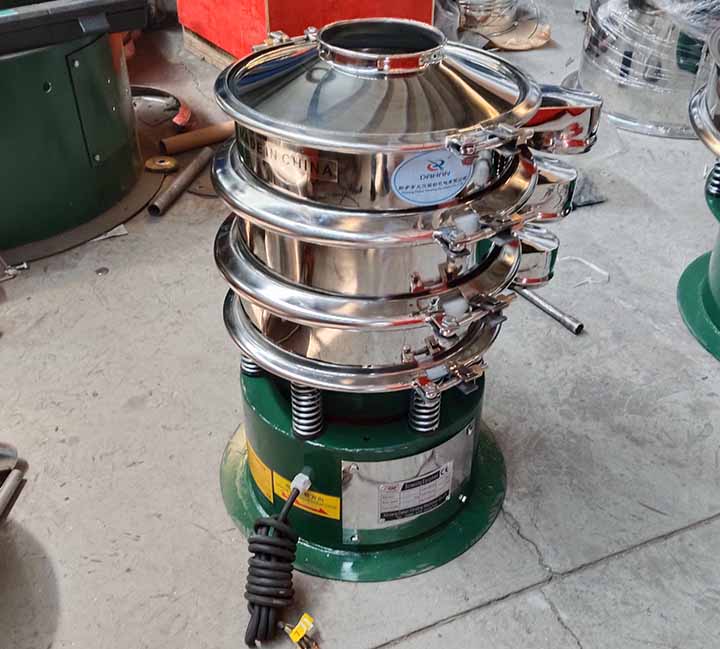
An industrial particle screening machine utilizes multi-layer mesh decks and excitation forces to accomplish particle grading, impurity removal, and solid-liquid separation. Selection requires verifying material particle sizes, mesh range, hourly throughput, and anti-blinding configurations. Properly matching rotary screens, linear screens, or tumbler screens stabilizes production line capacity and reduces downtime for maintenance.


Address:China,Yanjin county forest park gate to the west 1000 meters north road.


 Online Chat
 Email