


Choosing a screen mesh for a rotary vibrating sieve starts with the material and the required separation, not simply the mesh number. The same screen opening can perform very differently when the material changes from a dry powder to a sticky, abrasive, or moisture-sensitive product. The same screen opening can perform very differently when the material changes from a dry powder to a sticky, abrasive, or moisture-sensitive product.
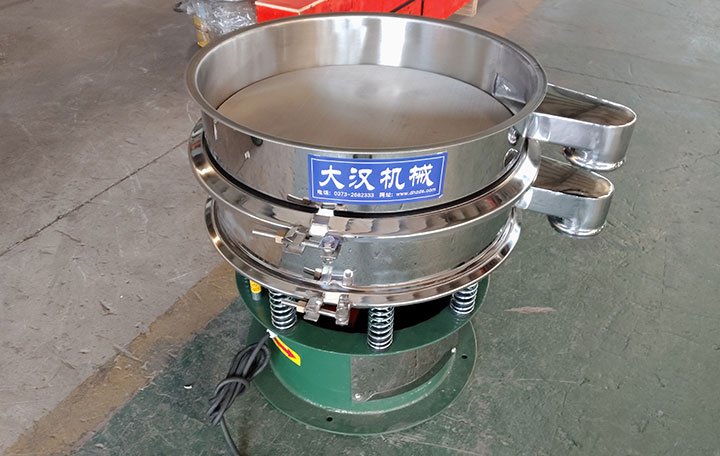
For fine screening, the mesh needs to match both the material and the separation requirement. Particle size, moisture, particle shape, abrasiveness, required capacity, and the final screening result all affect the choice of screen mesh. A suitable mesh can maintain stable screening and reduce blinding, while an unsuitable one may cause low output, poor separation, or frequent screen replacement.
This guide explains how to choose vibrating screen mesh for different materials when using a rotary vibrating sieve, from aperture selection and screen construction to material compatibility and practical screening considerations.
The right screen mesh starts with the material being screened. A mesh that works well for a dry, free-flowing powder may perform poorly with a damp, sticky product or a coarse, abrasive material. Before selecting the mesh, consider how the material behaves on the screen surface.
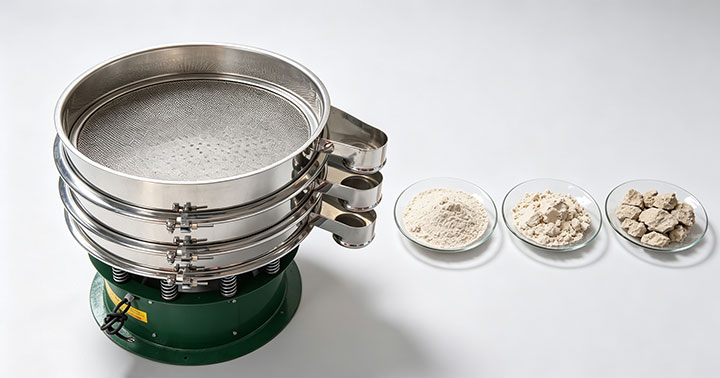
Particle Size and Size Distribution
First determine the approximate particle size range and how much of the material is close to the required separation size. A narrow particle size range is generally easier to screen, while a wide distribution may require more than one screening stage or different screen decks. For fine screening, the amount of near-size particles can also affect screening efficiency and screen loading.
Moisture and Stickiness
Moisture can cause particles to stick together or adhere to the screen surface. This is particularly important when screening powders, starches, fertilizers, chemicals, and other materials that absorb moisture easily. If the material tends to form lumps or block openings, simply choosing a finer mesh may increase blinding instead of improving separation.
Hardness and Abrasiveness
Abrasive materials can wear the screen surface during continuous operation. When screening hard particles, consider not only the required opening but also the strength and wear resistance of the selected screen media. A mesh that provides the correct separation but wears too quickly may lead to unstable screening and frequent replacement.
Particle Shape
Particles do not always behave according to their nominal size. Round, cubic, flaky, elongated, and irregular particles can pass through the same opening differently. Long or flaky particles may bridge across openings, while irregular particles may change orientation as they move across the screen. Particle shape should therefore be considered together with the required separation size.
Temperature and Corrosiveness
Material temperature and chemical properties can also affect screen selection. Hot materials may require screen media and machine components suitable for the operating temperature, while corrosive materials may require a more suitable material for the screen surface and contact parts. For food, pharmaceutical, or chemical applications, material compatibility and cleaning requirements should also be considered.
Bulk Density and Flowability
Two materials with similar particle sizes can behave very differently if their bulk density and flowability are different. A free-flowing powder can distribute across the screen surface more easily, while a cohesive or poorly flowing powder may concentrate in one area and reduce the effective screening area. These characteristics should be considered when determining the screen mesh and the overall configuration of the rotary vibrating sieve.
Once the material characteristics are clear, the next step is to define the actual separation job. The screen mesh should not be selected only from the material name. It should be selected according to what needs to pass through the screen, what needs to be retained, and how much material must be processed.
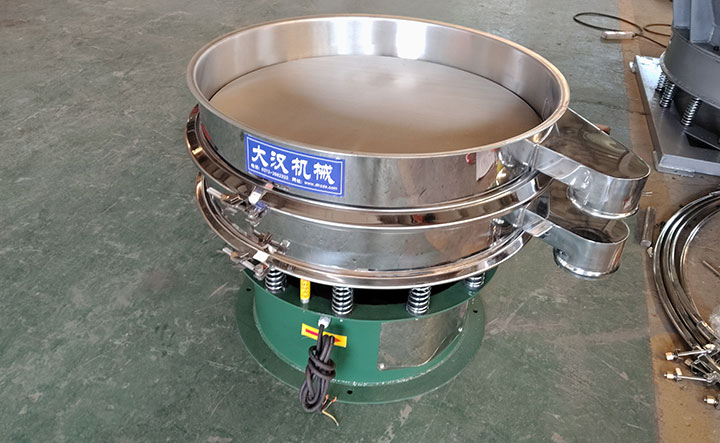
Target Separation Size
Identify the particle size that separates the acceptable material from the unwanted fraction. This target size determines the required screen opening. For example, if the purpose is to remove particles above a specified size, the screen should be selected around that separation requirement rather than simply choosing the finest available mesh.
Oversize Removal
Some applications use the rotary vibrating sieve mainly to remove coarse particles, lumps, or foreign material from an otherwise fine product. In this case, the screen does not necessarily need to produce a very fine classification. The priority is to allow the desired material to pass while reliably retaining the oversize fraction.
Fine Particle Recovery
In other applications, the valuable product is the fine fraction passing through the screen. This requires attention to the amount of fine material in the feed and the possibility of screen blinding. A finer opening may provide the required cut size, but only if the material can continue to pass through the screen without rapidly blocking the openings.
Multiple Size Fractions
If the material needs to be separated into several particle-size ranges, a single screen surface may not be enough. A rotary vibrating sieve can be configured with multiple screening layers so that different fractions are discharged separately. The mesh opening on each layer should correspond to the required separation point for that stage.
Required Screening Accuracy
Consider how strict the final particle-size requirement is. Screening for simple oversize removal has different requirements from applications where particle size distribution must be tightly controlled. When separation accuracy is important, the mesh opening, screen construction, material properties, and screening conditions need to work together rather than relying on mesh number alone.
Processing Capacity
The required throughput also affects mesh selection. A screen that provides excellent separation in a small test may not deliver the same result when the feed rate is increased. Excessive loading can shorten the time particles remain on the screen and reduce the opportunity for correctly sized particles to pass through. Therefore, the required capacity should be considered before finalizing the mesh and rotary vibrating sieve configuration.
Once the separation size is defined, determine the required screen aperture. The aperture controls particle passage, while the mesh construction affects strength, open area, and service life.
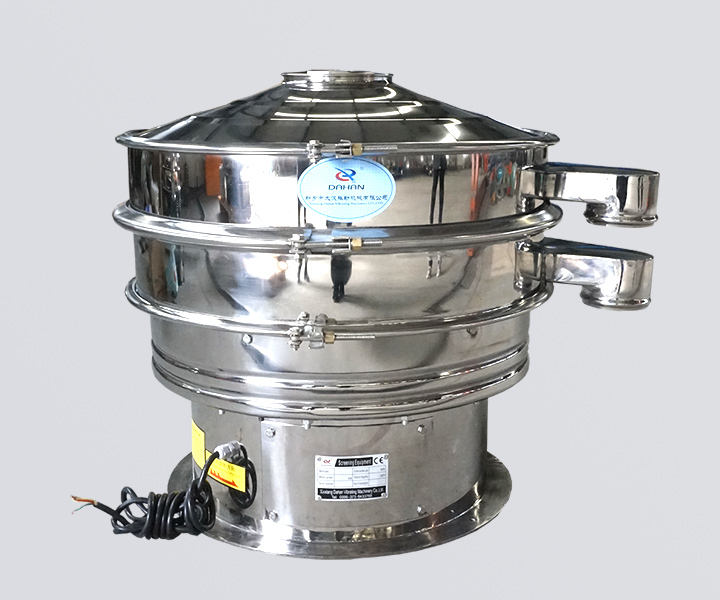
100-mesh vibrating screen for fine material screening
For a rotary vibrating sieve, select the mesh by balancing aperture, wire diameter, open area, and material characteristics rather than choosing a mesh number alone.
Once the required aperture is known, choose a screen surface that can handle the material and operating conditions. The best choice depends on the balance between screening accuracy, wear resistance, open area, and the risk of blinding.
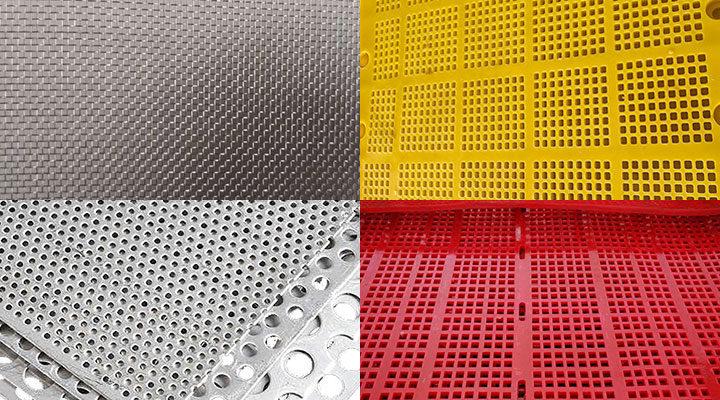
Woven Wire Mesh: Woven wire mesh is widely used for fine screening because it offers a broad range of apertures and good separation accuracy. It is suitable for many dry powders, granules, and other materials where precise particle-size separation is required.
Polyurethane Screen Media: Polyurethane screen media can be considered when wear resistance and service life are important. Its flexible surface can also be useful for applications where conventional wire mesh is prone to damage or blinding.
Rubber Screen Media: Rubber screen media provides flexibility and impact resistance, making it suitable for materials that place greater mechanical stress on the screen surface. The final choice should still be based on the required aperture and material characteristics.
Perforated Metal Screen: Perforated metal screens use formed openings rather than woven wires. They can provide a rigid screening surface for applications requiring structural strength, although their opening pattern and available open area differ from woven mesh.
For a rotary vibrating sieve, the screen surface should be selected according to the material, aperture, screening accuracy, and expected operating conditions rather than by screen type alone.
The same material category can behave differently depending on its condition. Moisture, particle cohesion, abrasiveness, and chemical properties can change how the material moves across the screen and how easily particles pass through the openings.
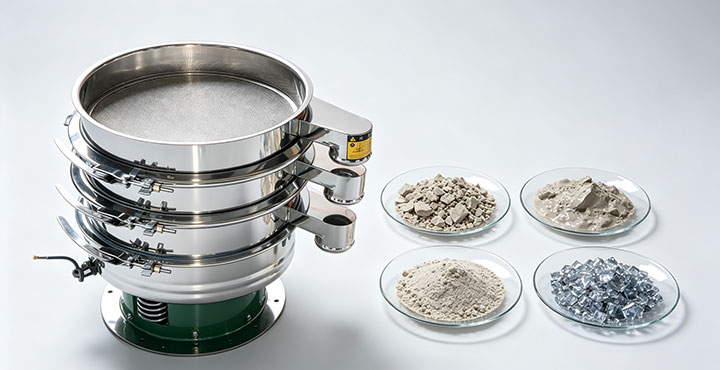
Dry and Abrasive Materials
Dry materials are generally easier to screen, but hard or abrasive particles can wear the screen over time. In these applications, consider a screen construction that provides sufficient wear resistance without sacrificing the required separation opening.
Wet or Sticky Materials
Wet or sticky materials can adhere to the screen surface and block openings. A suitable screen should help maintain material movement and reduce blinding. If moisture is significant, the screening process may also require changes to feed rate or machine configuration rather than simply using a finer mesh.
Fine and Cohesive Powders
Very fine powders can agglomerate and resist passing through small openings even when their individual particles are smaller than the aperture. For these materials, screen selection should be considered together with vibration conditions, feed rate, and the possibility of using an ultrasonic or other anti-blinding system.
Food and Pharmaceutical Materials
Food and pharmaceutical screening often requires attention to cleanliness, corrosion resistance, product contamination, and ease of cleaning. The screen material and construction should therefore be compatible with the product and the required hygiene conditions, not selected only according to aperture size.
Corrosive Materials
Chemically aggressive materials can affect the service life of the screen surface and other material-contact components. Screen material should be selected according to the chemical environment and operating conditions so that the required opening can be maintained during service.
In practice, material condition can be just as important as particle size. A mesh with the correct aperture may still perform poorly if it cannot handle the moisture, cohesion, abrasion, or chemical properties of the material.
The following chart provides a practical starting point for selecting screen mesh according to common material conditions. The final mesh aperture and screen construction should still be confirmed based on the actual material and required separation.
| Material Condition | Typical Screening Challenge | Mesh Selection Consideration |
|---|---|---|
| Dry, free-flowing powder | Generally easy to screen | Focus on the required aperture and screening accuracy |
| Fine cohesive powder | Particle agglomeration and blinding | Use a suitable fine aperture with attention to anti-blinding performance |
| Wet or sticky material | Material adheres to the screen surface | Prioritize resistance to blinding and stable material movement |
| Abrasive particles | Screen wear during continuous operation | Consider screen strength and wear resistance together with aperture |
| Irregular or flaky particles | Particles may bridge or pass inconsistently | Consider particle shape and opening geometry, not particle size alone |
| Food or pharmaceutical powder | Hygiene, cleaning, and contamination control | Consider suitable screen material and cleanable construction |
| Corrosive material | Screen surface may be affected by the material | Choose a screen material compatible with the chemical environment |
This chart is a starting point rather than a fixed mesh specification. For a rotary vibrating sieve, the final selection should combine material characteristics, required separation size, processing capacity, and actual screening conditions.
A screen mesh does not work independently from the material being processed. Even when two applications use the same aperture, their screening results can be very different because particle behavior changes with moisture, shape, density, cohesion, and feed conditions.
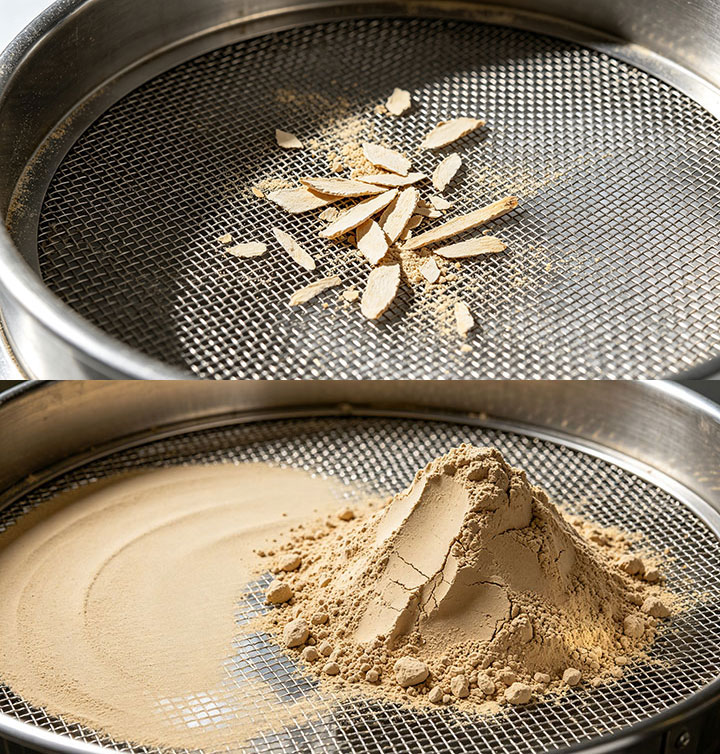
A dry, free-flowing powder may pass through the openings easily, while a powder with the same nominal particle size can form agglomerates and remain on the screen. Similarly, irregular or flaky particles may bridge across openings instead of passing through them in the same way as rounded particles.
Feed conditions also matter. If too much material enters the rotary vibrating sieve at once, particles can form a thick layer and have fewer opportunities to contact the screen surface. A suitable mesh may therefore show good results during a small screening test but produce lower efficiency when the feed rate is increased.
For this reason, mesh selection should be based on material behavior rather than aperture alone. The screen opening, material characteristics, feed rate, screening area, and vibration conditions need to work together to achieve stable separation.
A correctly selected mesh can still perform poorly if it does not match the vibrating screen itself. Before installation, check the screen dimensions, fastening method, deck arrangement, and operating conditions of the rotary vibrating sieve.
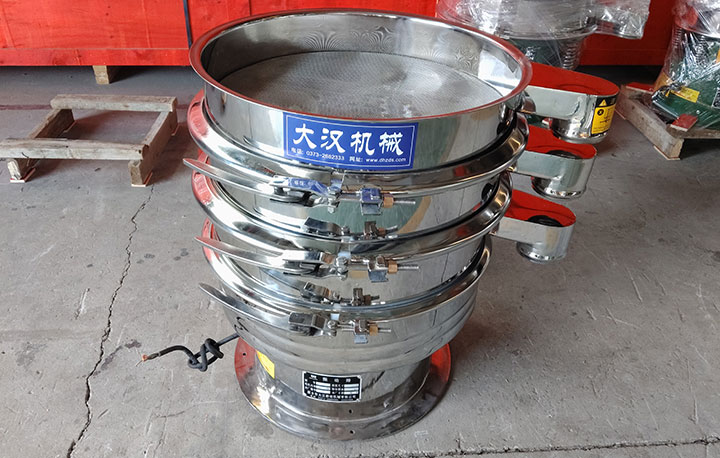
In short, mesh selection and machine configuration should be considered together. The right aperture cannot compensate for incorrect mesh installation, excessive loading, or unsuitable screening conditions.
A mesh can match the required aperture on paper and still deliver poor results in actual production. Most problems appear when the material, feed rate, screen condition, and machine settings interact differently from the original selection.
These failures show why screen mesh selection should be verified under actual operating conditions, especially when the material is fine, sticky, abrasive, or difficult to screen.
When the material is difficult to screen or the separation requirement is critical, a screening test is more reliable than selecting a mesh from particle size alone. A small material sample can reveal how the product actually behaves on the screen and whether the proposed mesh can achieve the required result.
Material Sample: Provide a representative sample of the actual material. Samples should reflect the normal production condition as closely as possible, including moisture, particle size, and any natural agglomeration.
Particle Size Distribution: Knowing the approximate particle size distribution helps determine which fraction needs to pass through the screen and where the main separation point should be.
Moisture: Record the material's moisture condition, especially for powders and products that can absorb water. Moisture can significantly change flowability and the risk of screen blinding.
Required Separation: Clearly define the desired result, such as removing oversize particles, recovering fine powder, or separating the material into several size fractions. The mesh should be selected around this actual requirement.
Target Capacity: State the required processing capacity together with the separation size. A mesh that performs well at a low feed rate may not provide the same result at production capacity.
Screening Test: A practical screening test can compare different apertures or screen constructions and evaluate screening capacity, separation accuracy, material carryover, and blinding. The test results can then be used to determine a more suitable mesh configuration for the rotary vibrating sieve.
For applications with uncertain material behavior, testing the actual material is often the most reliable way to finalize the screen mesh.
If you are unsure which vibrating screen mesh is suitable for your material, provide the basic screening requirements before selecting the screen. This allows the mesh aperture, screen construction, and rotary vibrating sieve configuration to be considered together.
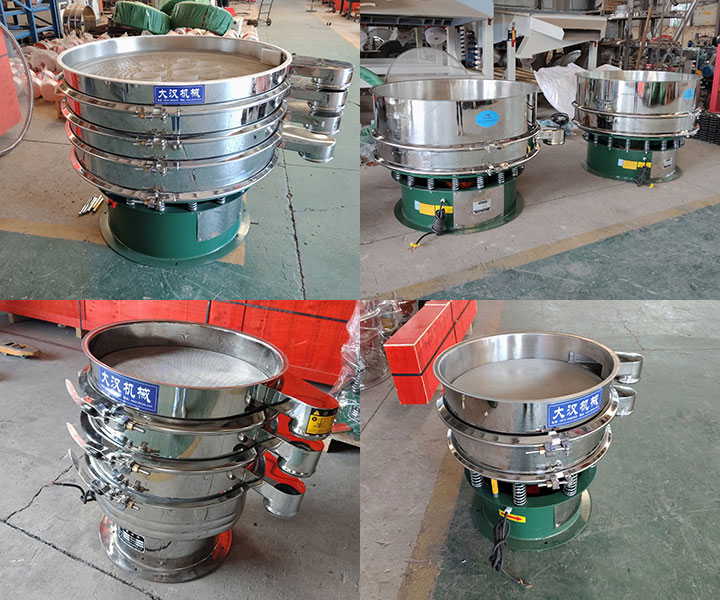
Please provide the following information:
For difficult or fine-screening applications, a material sample and screening test can provide additional information for confirming the mesh selection.
Send us your material information and screening requirements, and Dahan can help evaluate a suitable vibrating screen mesh and rotary vibrating sieve configuration for your application.
Start with the required separation size, then consider the material's particle size, moisture, stickiness, abrasiveness, particle shape, and flowability. The mesh aperture and screen construction should match both the material behavior and the required screening capacity.
Mesh number describes the number of openings within a given length, while aperture is the actual opening through which particles pass. Because different wire diameters can produce different apertures with the same mesh number, the aperture should be checked before selecting the screen.
Yes. Provide the material name, particle size, required separation size, material condition, and processing capacity. For difficult or fine-screening applications, a material sample and screening test can provide additional information for confirming the suitable mesh and rotary vibrating sieve configuration.


Address:China,Yanjin county forest park gate to the west 1000 meters north road.


 Online Chat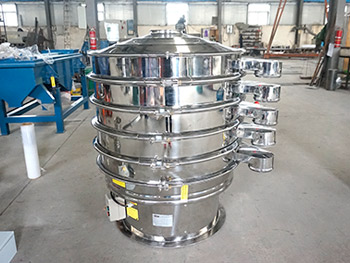
 Email
Email