


Selecting the optimal multi deck vibrating screen is a critical decision that directly impacts your mining operation's efficiency, product quality, and profitability. This comprehensive guide provides a systematic approach to choosing the right multi-deck screening equipment, covering everything from material analysis to technical specifications and screen media selection. We'll help you navigate the complexities to ensure you invest in the ideal vibrating screen for mining that maximizes your return on investment.
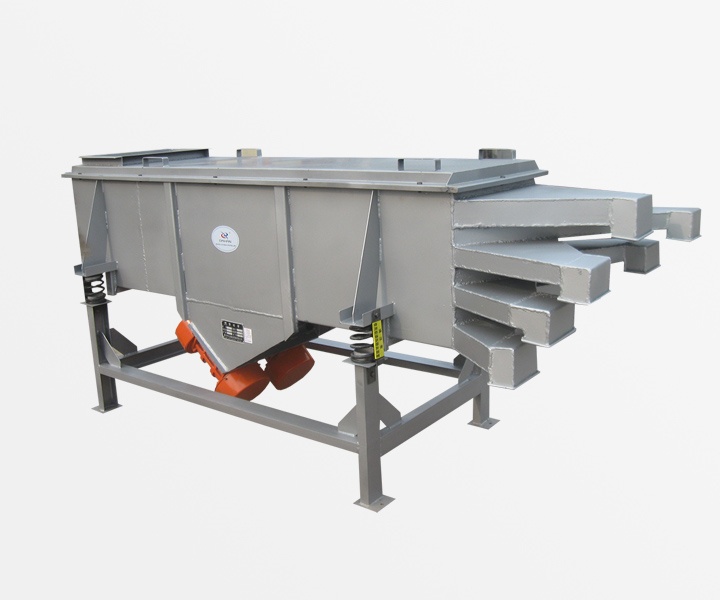
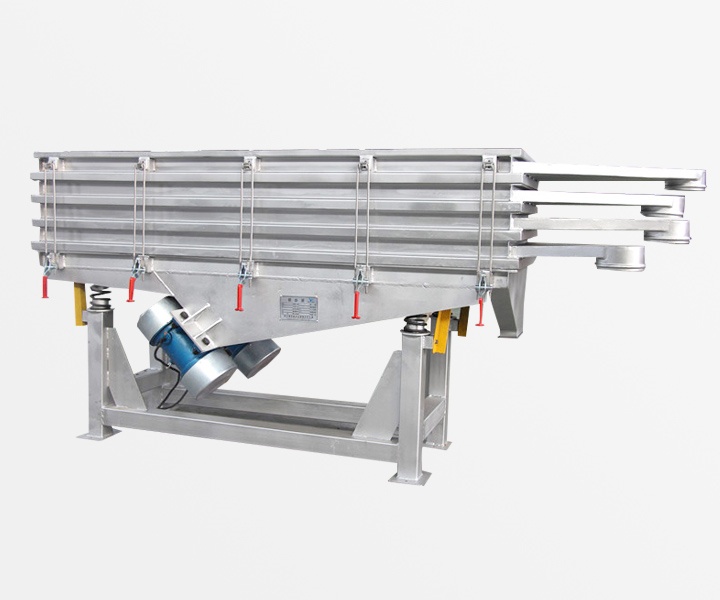
A multi deck vibrating screen (also known as a multiple-deck screener or multi-layer vibrating screen) is a piece of equipment featuring two or more stacked screen decks. Its primary function is to efficiently separate feed material into multiple distinct particle size fractions in a single pass. For any mining operation, this multi-deck design is indispensable because it:
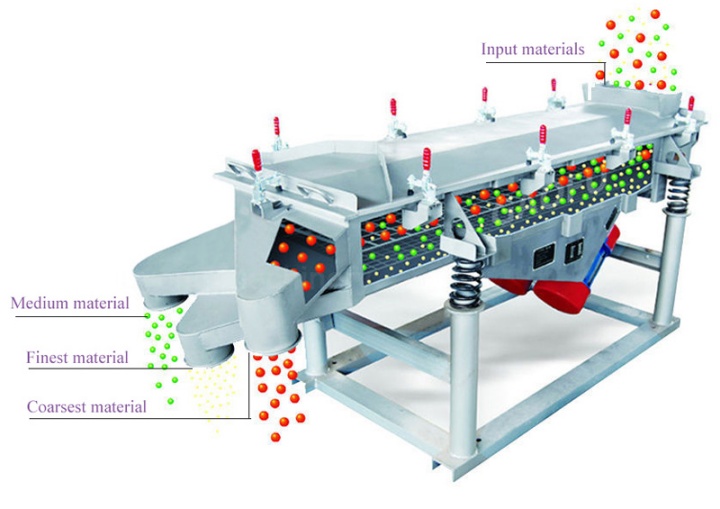
Before you look at any equipment specifications, you must first analyze the material you will be processing. The physical properties of your feed material are the single most important factor in selecting the right vibrating screen parameters.
The size of your material determines the required frequency and amplitude of the screen.
Coarse Materials (e.g., crushed stone, coal): Require low frequency (800–1500 RPM) and high amplitude (4–8 mm) to generate a strong throwing motion that moves large particles effectively.
Fine Materials (e.g., sand, fine ores): Need high frequency (2000–3600 RPM) and low amplitude (2–4 mm) to enhance the stratification effect, allowing fines to sift down to the screen surface.
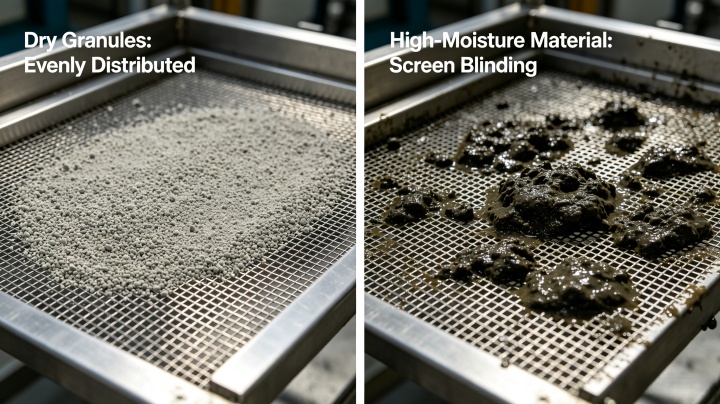
Moisture is a major enemy of screening efficiency. High moisture can reduce flowability, cause screen clogging, and significantly decrease performance.
For sticky or wet materials, look for features that combat blinding and clogging. This includes using polyurethane screen panels, which resist adhesion, and increasing the vibration intensity (G-force). Linear vibrating screens often outperform circular ones for wet materials due to better material transport.
Dense Materials (e.g., iron ore): Require a screen with a reinforced structure and higher amplitude to ensure proper material movement. Failure to adjust for heavy materials can lead to structural fatigue and premature wear.
Abrasive Materials: When screening hard, abrasive ores, prioritize screen media with high wearability, such as rubber or polyurethane panels, to maximize service life.
Once you understand your material, you can evaluate equipment specifications. Use the table below as a quick reference guide for key technical parameters.
| Specification | Typical Range | Why It Matters |
| Number of Decks | 1 – 4 (or more) | Determines how many size fractions you can produce. A 3-deck screen creates 4 products. |
| Screening Area | 3 – 45+ m² | Directly impacts throughput capacity. More area means more tons per hour. |
| Vibration Frequency | 800 – 1500+ RPM | Affects stratification efficiency. Higher frequency is better for fine particles. |
| Screen Inclination | 15° – 25° | A steeper angle increases material travel speed (higher capacity), while a shallower angle increases accuracy. |
| Processing Capacity | 20 – 500+ tons/hour | Must match your production targets. |
A note on G-force: Most industrial vibrating screens operate between 3–6 G. Difficult, sticky materials may require higher G-force, but excessive vibration increases maintenance costs and energy consumption.
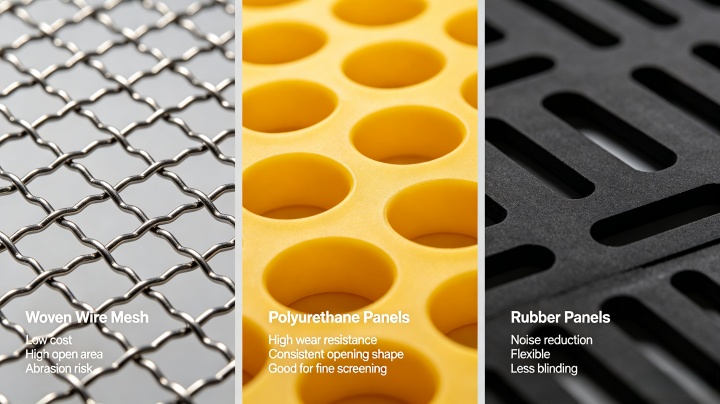
Choosing the right screen surface—the media—is just as important as picking the machine itself. The wrong media can halve your production or fail in weeks.
| Media Type | Best For | Key Trade-off |
| Woven Wire Mesh | Dry screening of aggregates and sand where maximum throughput is needed. | Lowest cost and highest open area, but wears fastest, especially with abrasive material. |
| Polyurethane Panels | Wet screening and abrasive materials like recycled concrete or ores. | Longer wear life (3-5x longer than wire) and quieter, but reduces throughput due to lower open area. |
| Rubber Panels | Heavy-duty scalping applications with large rocks (top size > 12 inches) and high impact. | Excellent impact resistance, handles sticky material well, but lower open area. |
Pro Tip: Many operations use a combination of screen media to optimize for different phases of screening. For instance, more durable media at the feed end to handle impact, and woven wire at the discharge end to maximize open area.
While the term "vibrating screen" is broad, understanding the main types will help you narrow down your options.
| Screen Type | Motion | Best Application | Key Advantage |
| Inclined Vibrating Screen | Circular | Pre-screening and classification of coarse particles in dry applications. | Simple, proven, affordable, and the most common type in quarries. |
| Linear Vibrating Screen | Linear | Dewatering, mud removal, and fine particle classification. Excellent for materials with >8% moisture. | High throughput and superior dewatering capacity. Material moves slower for more contact time. |
| Banana Screen (Multi-Slope) | Variable | High-capacity classification of large tonnages of coal and iron ore (< 150mm). | Extremely high processing capacity and efficiency in a smaller footprint. |
| High-Frequency Screen | High-Freq Vibration | Fine particle separation (below 1/4 inch), gold tailings recovery, and lithium concentrate classification. | Excellent for tight size specifications and fine separations. |
Note: Multi-slope or Banana screens are highly effective for large tonnages but are not well-suited for the aggregates industry where precise, exact material sizes are critical.
Before making a purchase, ensure you can answer these questions:
Choosing the right multi deck vibrating screen is a strategic decision that impacts your entire processing line. By focusing on your material properties and following this systematic approach, you can select a system that delivers maximum efficiency, durability, and return on investment.
Need help selecting the ideal vibrating screen for your specific mining application? Contact our team for a free consultation and custom recommendation.
What is the maximum number of decks on a vibrating screen?
While configurations vary, heavy-duty vibrating screens are available with up to four decks, allowing for the production of up to five different sized products in a single pass.
How do I calculate the capacity of a multi deck screen?
Screen capacity is determined by factors like screening area, material type, and cut size. Manufacturers typically provide capacity charts. For example, a 5x16 foot screen can handle 200 to 400 tons per hour of crushed stone, depending on the separation requirements. We recommend a site-specific assessment.
What is the difference between an inclined and a horizontal multi deck screen?
An inclined screen (15-25° angle) uses gravity to move material, offering high capacity for dry materials. A horizontal (or linear) screen uses a vibrating motion to convey material, keeping it on the deck longer for more precise sizing and superior dewatering.
How often should screen media be replaced?
This depends entirely on the material being screened. Abrasive materials will wear out woven wire in weeks, while polyurethane can last 3-5 times longer. Regular weekly inspections are crucial to identify wear and prevent unplanned downtime.


Address:China,Yanjin county forest park gate to the west 1000 meters north road.


 Online Chat
 Email
Email