


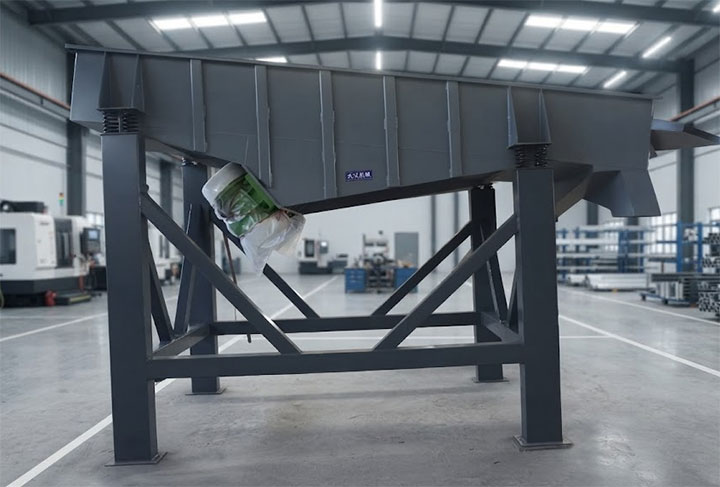
In sand and gravel processing plants, the sand vibrating screen is the core equipment that dictates overall productivity. However, operators often make the mistake of blindly increasing motor speed to solve low throughput and screen blinding, which only accelerates mechanical wear. Instead, the real key to maximizing performance lies in frequency-amplitude matching—scientifically tuning these two dynamic parameters to achieve a efficiency boost without major capital investment.
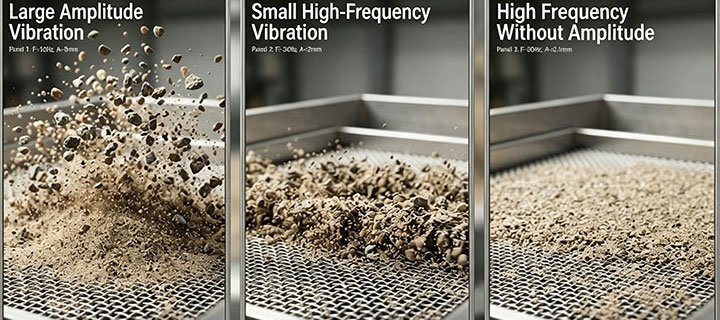
To understand why frequency-amplitude matching works, you must look at how materials move across the screen surface:
Different sand and gravel processing stages require tailored parameter combinations. Here is the recommended matching matrix for optimal screening efficiency:
| Material / Application | Recommended Frequency | Recommended Amplitude | Operational Goal |
|---|---|---|---|
| Fine Sand (≤1mm) | High (900-1000 RPM) | Low (2-3 mm) | Ensures fine particles are fully suspended and pass through the mesh. |
| Medium Aggregates (1-10mm) | Medium (800-900 RPM) | Medium (3-5 mm) | Balances overall processing capacity and separation precision. |
| Coarse Gravel (10-50mm) | Low-Mid (700-800 RPM) | Large (5-8 mm) | Enhances material bouncing and reduces structural impact. |
| High-Moisture / Sticky Sand | Optimized Mid-High | Controlled Large | Prevents screen blinding and material agglomeration. |
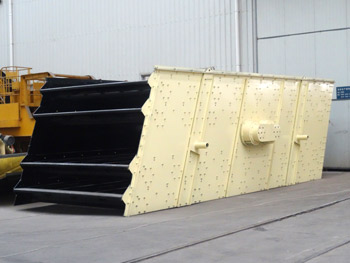
For instance, during a recent on-site technical service for a limestone aggregate quarry in Southeast Asia utilizing our heavy-duty inclined vibrating screen model, the plant experienced restricted hourly throughput due to seasonal high-moisture feed.
Instead of recommending a costly equipment replacement, our field engineers adjusted the eccentric block phase angle and mass configuration to lock the operating frequency at 920 RPM with a stable 3.5 mm amplitude. This targeted tuning brought the throwing index back into the optimal bracket, mitigating screen blinding and yielding a 30% net increase in hourly processing capacity while dropping motor load current by 15%.
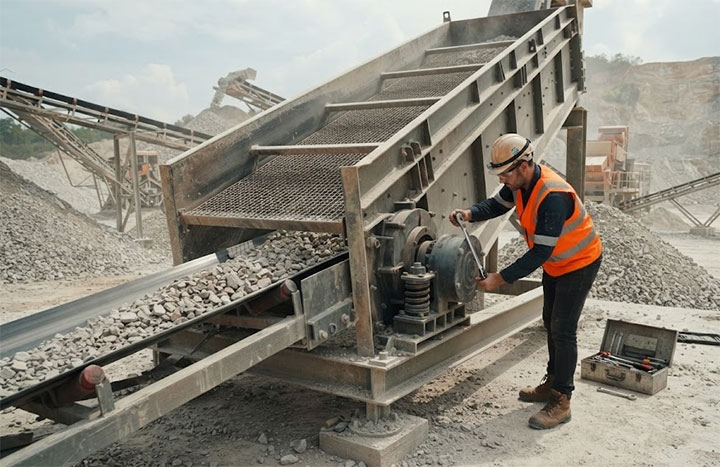
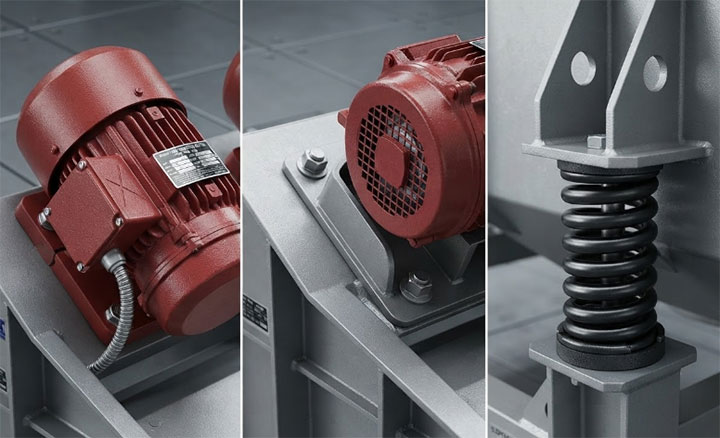
While maximizing output is the primary goal, plant operators must also protect the mechanical integrity of the equipment. Pushing motor frequencies beyond safe design thresholds creates severe stress concentrations on exciter bearings, side plates, and spring mounts, leading to premature fatigue and costly downtime.
By utilizing an optimized amplitude-first tuning strategy that maintains a steady frequency while applying proper stroke lengths, operators can achieve superior separation efficiency, safeguard critical mechanical components, and extend the overall operating lifecycle of the machine.
Screen blinding is typically caused by high material moisture or an incorrect frequency-amplitude combination, which can be resolved by increasing the amplitude to provide sufficient impact force to clear the mesh.
No, blindly increasing frequency causes materials to slide flatly without proper stratification while placing excessive mechanical stress on the exciter bearings.
Use a combination of controlled large amplitude and optimized mid-high frequency to generate enough impact force to prevent material agglomeration and keep mesh apertures open.
Mastering the balance between frequency and amplitude is the foundation of high-performance sand and gravel processing. While general guidelines provide a solid starting point, every quarry and aggregate plant operates under unique material characteristics and moisture conditions.
If your processing plant is currently facing low throughput, excessive screen blinding, or premature equipment wear, our technical team is ready to help. Contact us today to discuss your specific aggregate specifications and receive a customized vibrating screen configuration designed to maximize your production output.


Address:China,Yanjin county forest park gate to the west 1000 meters north road.


 Online Chat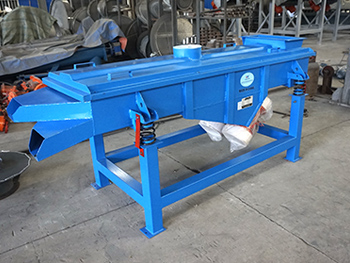
 Email
Email