


Industrial vibrating separator selection hinges on a fundamental geometry choice: rectangular linear sifters versus circular vibratory screens. Round screening, powered by a 3D gyroscopic principle, delivers superior precision for multi-fraction powder processing through extended retention time and adjustable motion control. This engineering guide provides an actionable blueprint for matching the ideal separator to your specific material behaviors and production targets.
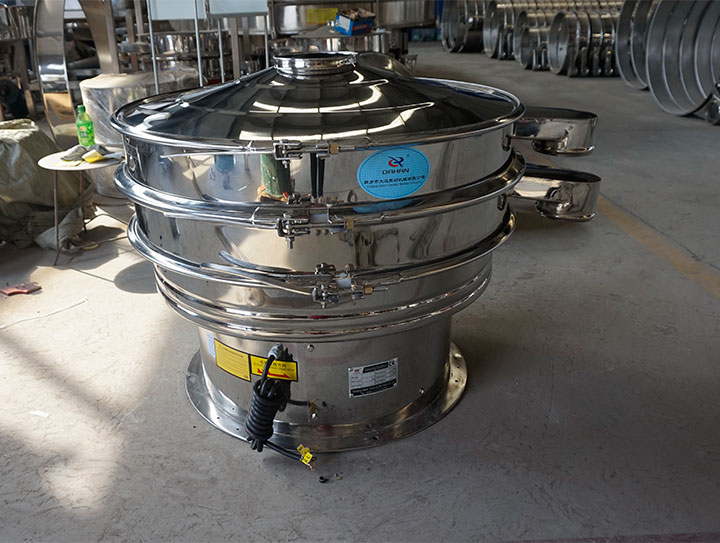
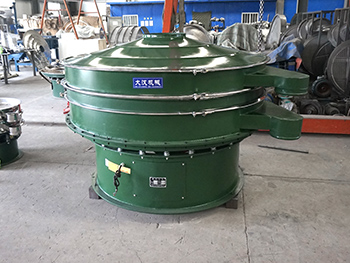
To understand why round screening is highly effective for precision processing, we need to analyze the specific physics of its movement. Unlike traditional linear screens that move material back and forth in a single plane, a high-performance circular industrial vibrating separator operates on a sophisticated 3D gyroscopic principle.
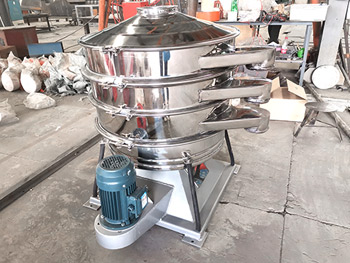
At the heart of this technology is a heavy-duty vibratory motor mounted vertically in the center of the machine base. This motor is equipped with adjustable eccentric top and bottom weights.
The Top Weight: Creates a horizontal vibration plane, forcing the material to move from the center of the mesh out toward the periphery.
The Bottom Weight: Acts to tilt the machine, creating a vertical and tangential vibration plane.
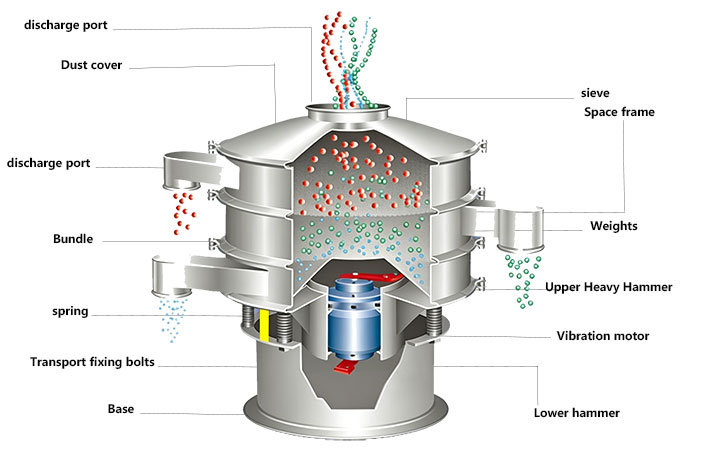
When these forces combine, they generate a unique multi-plane, three-dimensional vibration. Instead of just bouncing up and down, the material on the screen mesh travels in a controlled, spiral path. This 3D gyroscopic action offers two massive engineering advantages:
Extended Retention Time: The spiral pattern keeps the material on the mesh surface longer compared to linear screens. This gives near-size particles more opportunities to drop through the screen openings, drastically increasing screening efficiency and precision.
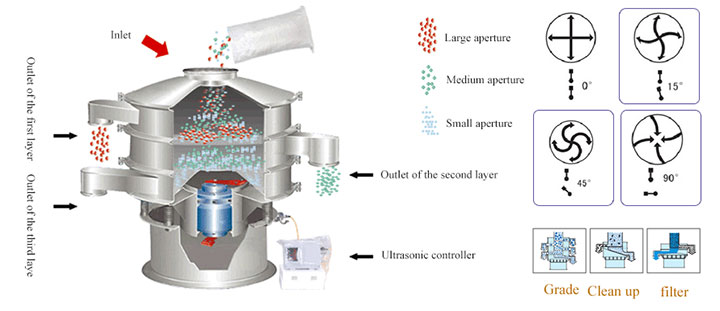
Adjustable Material Control: By changing the lead angle of the bottom eccentric weight relative to the top weight, engineers can alter the spiral pattern. You can slow down material travel for hard-to-screen fine powders to maximize accuracy, or speed it up for rapid scalping operations.
By mastering this three-dimensional motion, the circular industrial vibrating separator achieves excellent grading accuracy in a remarkably compact footprint.
When choosing an industrial vibrating separator, plant engineers typically evaluate two primary geometries: circular and rectangular. While rectangular linear screens are excellent for high-volume, coarse scalping of heavy materials like aggregates or coal, they often fall short when processing delicate, fine, or high-value powders.
In precise wet or dry separation, circular vibratory separators offer distinct engineering advantages. The table below summarizes the key performance differences based on independent testing[reference:6]:
| Performance Metric | Circular Vibrating Screen | Linear Vibrating Screen |
|---|---|---|
| Screening Efficiency (fine powders <3mm) | 90% – 95% | 75% – 85% |
| Particle Travel Velocity | Slower (longer retention time) | Faster (shorter retention time) |
| Throughput Capacity | 50 – 800 t/h | 100 – 1,200 t/h |
| Floor Space Required (for equivalent precision) | Compact (vertical stacking) | Significantly larger footprint |
| Multi-Deck Configuration | Up to 4 decks in one unit | Complex multi-machine setup required |
| Dust-Tight Sealing | Uniform pressure distribution | Prone to localized stress warping |
| Power Consumption (per ton processed) | Lower | Higher |
Source: Independent laboratory testing data (2025). Efficiency figures based on dry screening of materials with particle size distribution <3mm.
Maximum Sizing Accuracy per Square Foot: Because the 3D gyroscopic motion forces material into a longer, spiral travel path across the screen mesh, particles spend more time in contact with the separation surface. This extended retention time allows circular separators to achieve high-precision grading accuracy within a highly compact screening footprint. To get the same precision from a rectangular screen, the machine would need to be significantly longer, consuming valuable factory floor space.
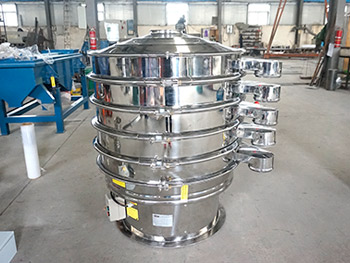
Versatile Multi-Deck Configuration: In multi-fraction screening—where a single feed material must be split into three, four, or five distinct particle sizes—circular designs are structurally optimized. Multiple screen decks can be stacked vertically on top of each other within a single unit. Each deck has its own dedicated discharge outlet. Achieving the same multi-stage separation with rectangular screeners usually requires a complex, sprawling multi-machine setup or highly complicated cascading internal chutes.
Superior Dust-Tight Containment: Processing hazardous, fine, or hygroscopic powders requires strict environmental control to prevent cross-contamination and protect operators. The round geometry of a circular industrial vibrating separator allows for seamless sealing using v-band clamps or rapid-action clamps and O-ring profiles. Unlike rectangular covers that are prone to localized stress warping and subsequent dust leaks, the uniform pressure distribution of a round screener ensures reliable containment.
By delivering high-precision accuracy, vertical scalability, and reliable sealing in a compact design, round screening technology consistently provides the optimal return on investment for fine powder processing lines.
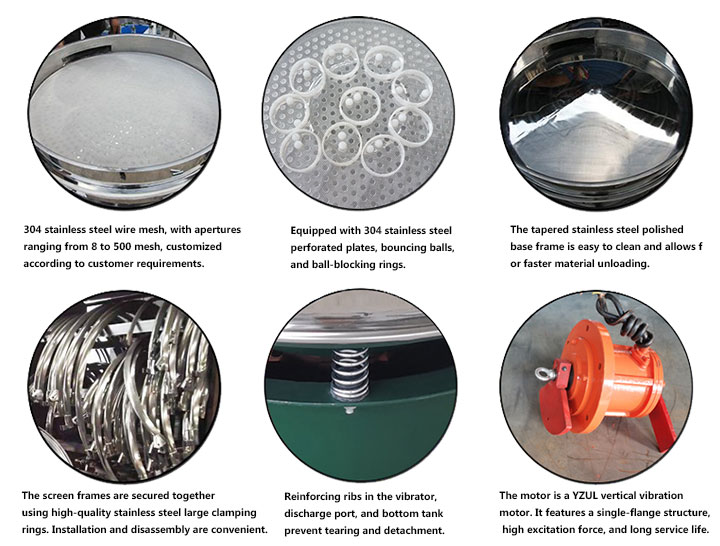
The operational reliability of a circular industrial vibrating separator depends on the mechanical integration of its core components. To maintain continuous throughput under heavy industrial loads, the machine relies on three critical sub-assemblies:
The Vertically Mounted Vibratory Motor: Positioned at the center of gravity within the machine base, the heavy-duty motor uses double-ended shafts to support adjustable eccentric weights. The relative angle between the top and bottom weights determines the horizontal and vertical lead angles of the screening motion. By manually adjusting these weights, operators calibrate the tangential force to match the specific flow characteristics of the material.
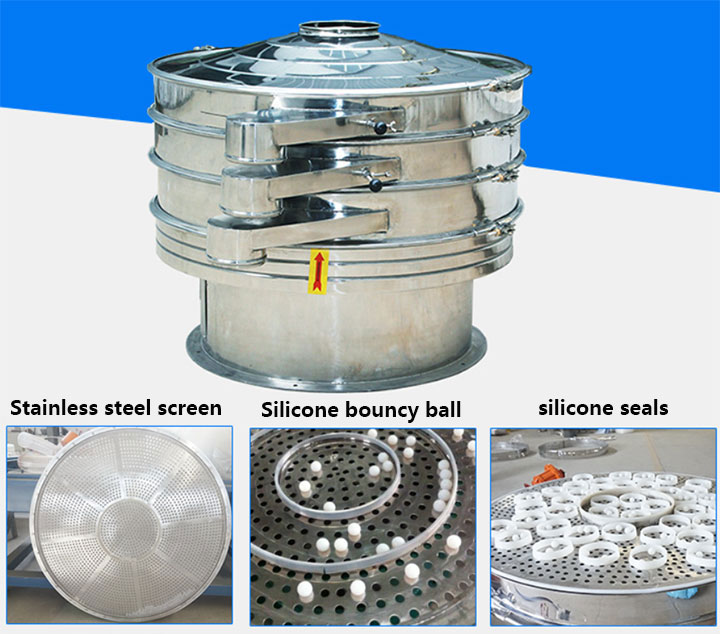
The Screen Frame and Tensioned Mesh Assembly: Modern circular separators utilize a pre-tensioned screen mesh bonded or clamped to a rigid stainless steel frame (typically grade 304 or 316L for sanitary applications). The uniform tension across the entire diameter prevents mesh sagging, which is the primary cause of uneven screen wear and premature tearing.
Mechanical De-blinding Systems: For sticky, electrostatic, or near-size particles that tend to lodge inside the mesh apertures, mechanical anti-blinding devices are installed directly beneath the screen cloth. These typically consist of food-grade silicone bouncing balls or sliding rings contained within a support tray. As the machine vibrates, these elements strike the underside of the mesh, dislodging trapped particles to maintain open screen area and constant material flow.
The Robust Spring Suspension Base: The entire screening assembly rests on a circle of heavy-duty isolation springs mounted on the stationary base. These springs isolate the dynamic structural forces generated by the vibratory motor, absorbing over 95% of the vibration to prevent kinetic energy transmission to the factory floor and adjacent processing equipment.
Through this modular, force-isolated architecture, the circular industrial vibrating separator converts raw motor power into controlled screening action while maintaining structural longevity.
Selecting and specifying a circular industrial vibrating separator requires a precise alignment between material characteristics and machine configurations. Before issuing a purchase order, engineering teams should verify the following five technical parameters:
The volumetric weight of the material dictates the motor horsepower requirement and the spring rate of the suspension system. Sticky or static-prone powders require the integration of ultrasonic de-blinding systems rather than standard bouncing balls, as ultrasonic frequencies prevent fine particles from blinding the mesh without mechanical abrasion.
Determine the exact mesh counts required for the application. If the process requires multi-fraction separation, specify the number of screen decks (up to four decks per single unit). Ensure the discharge spouts are oriented to align with the existing plant conveyor or bagging stations to minimize material drop height.
For food, beverage, or pharmaceutical installations, the entire material contact zone is required to utilize grade 316L stainless steel with a surface roughness finish polished to internal mirror standards (often measured as Ra < 0.4 µm). Gaskets and silicone seals should carry explicit FDA compliance certification to mitigate chemical leaching risks.
Match the daily production targets with the available screening area. Standard diameters range from 24 inches (600 mm) for batch operations to 60 inches (1500 mm) or larger for continuous, high-volume process lines. Over-sizing ensures a safety margin for surge feeding, while under-sizing leads to material accumulation and poor separation efficiency.
Circular vibrating screens offer a significantly smaller footprint than linear alternatives for equivalent screening precision. Measure the available installation area, overhead clearance, and access requirements for maintenance. Consider the orientation of inlet and outlet ports relative to upstream and downstream equipment to minimize material handling costs.
By systematically verifying these engineering parameters, processing plants can deploy an industrial vibrating separator configured for long-term operational stability and predictable material grading performance.
The following case studies are based on actual client implementations. Names and specific product details have been anonymized for confidentiality.
Challenge: A mid-sized food additive producer was using a linear vibrating screen to classify fine powder (target particle size: 150 microns). The existing system achieved only 92% screening efficiency, with frequent mesh blinding causing 4-6 hours of unplanned downtime per month.
Solution: The plant switched to a 48-inch (1200mm) circular industrial vibrating separator with a single deck, fitted with ultrasonic de-blinding system and 316L stainless steel contact parts.
Results (6 months post-installation):
Challenge: A pharmaceutical company processing active pharmaceutical ingredients (APIs) needed to separate three distinct particle size fractions from a single feed stream. Their existing setup used three separate linear screens in series, consuming excessive floor space and creating multiple contamination risk points.
Solution: The facility installed a single 60-inch (1500mm) circular vibrating separator with three stacked screen decks, each with dedicated discharge outlets. All contact surfaces were 316L stainless steel with mirror polish (Ra < 0.4 µm) and FDA-compliant silicone seals.
Results (12 months post-installation):
Challenge: A chemical plant needed to remove oversize contaminants (>>2mm) from a high-value powder feed at 5 tons/hour. The existing rectangular screen frequently experienced screen tearing due to uneven tensioning, causing product contamination and batch rejection.
Solution: The plant installed a 40-inch (1000mm) circular vibrating separator with pre-tensioned mesh and heavy-duty frame construction.
Results (3 months post-installation):
A 40-inch (1000mm) diameter circular vibrating screen is typically recommended for most powder applications at 5 T/H. However, the exact diameter depends on bulk density and mesh size — send us your material specs for a precise calculation.
Use 304 for standard dry food applications. Use 316L (with Ra < 0.4µm mirror polish) for wet, acidic, salty, or pharmaceutical applications where corrosion resistance and absolute purity are mandatory.
Ultrasonic is essential when processing particles below 500 microns, high-moisture, or electrostatic powders that easily blind mesh. It transmits 30-40 kHz vibrations to keep apertures clear without mechanical abrasion.
Selecting the ideal industrial vibrating separator requires detailed application knowledge. To eliminate specification errors and achieve predictable output accuracy, processing plants should collaborate with experienced screening manufacturers.


Address:China,Yanjin county forest park gate to the west 1000 meters north road.


 Online Chat
 Email
Email