


When procuring industrial separation equipment, looking only at the price tag is a common trap for plant managers. In our manufacturing workshops at Dahan Machinery, we frequently consult with clients who purchased generic machines only to find frequent screen blinding, low throughput, or premature motor burnout.Evaluating precise technical specifications—such as dynamic G-force, material contact grade, and accurate mesh sizing—ensures seamless integration into your existing aggregate, chemical, or food-processing lines while safeguarding your long-term return on investment (ROI).
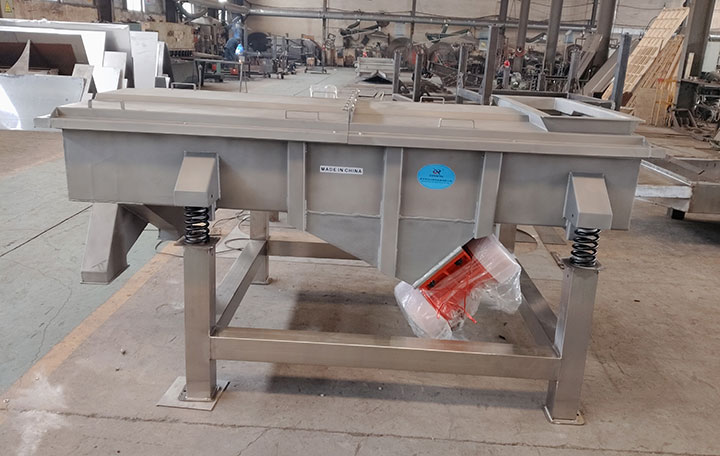
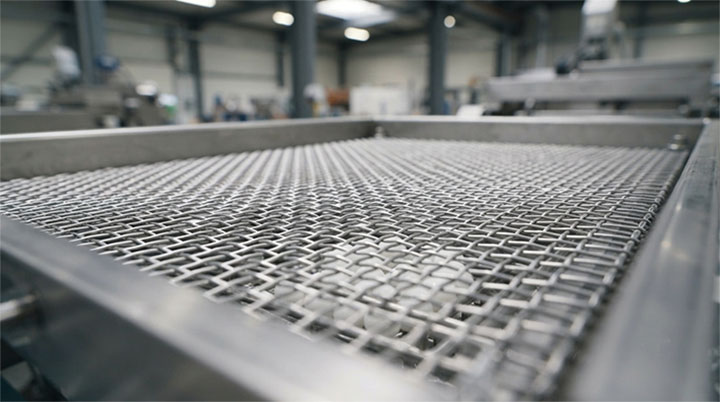
The primary job of any vibrating screen machine is to separate materials accurately according to particle size. However, specifying just the "mesh size" is rarely enough for complex industrial applications. You must evaluate the open area percentage and the exact weave type of the screen mesh.
"In our production floor testing, we often see clients struggling with material blinding when processing fine sticky powders. We always recommend balancing the aperture size with anti-blinding devices like bouncing balls or ultrasonic transducer systems to maintain consistent screening efficiency above 95%."
The kinetic heartbeat of an industrial vibrating screen lies in its vibration parameters. When reviewing spec sheets, pay strict attention to:
Amplitude (Stroke): Determines how high the material is thrown. Larger amplitude suits coarse, heavy aggregates; smaller amplitude is mandatory for fine, fragile powders.
Frequency (RPM): Speed of the vibration motors. Higher frequency increases particle stratification speed.
G-Force (Acceleration): The ultimate metric governing material movement speed across the deck. Insufficient G-force leads to low capacity, while excessive G-force damages the mesh structure prematurely.
Depending on your industry—whether it is chemical processing, food manufacturing, or metal powder metallurgy—the material contact grade is non-negotiable for safety and compliance.
At Dahan Machinery, we manufacture frames using standard carbon steel Q235A for general aggregates, while upgrading to Food-Grade SS304 or corrosion-resistant SS316L for pharmaceutical and chemical applications. Always verify whether the entire machine body or only the contact parts use stainless steel to avoid unexpected corrosion and budget overruns.
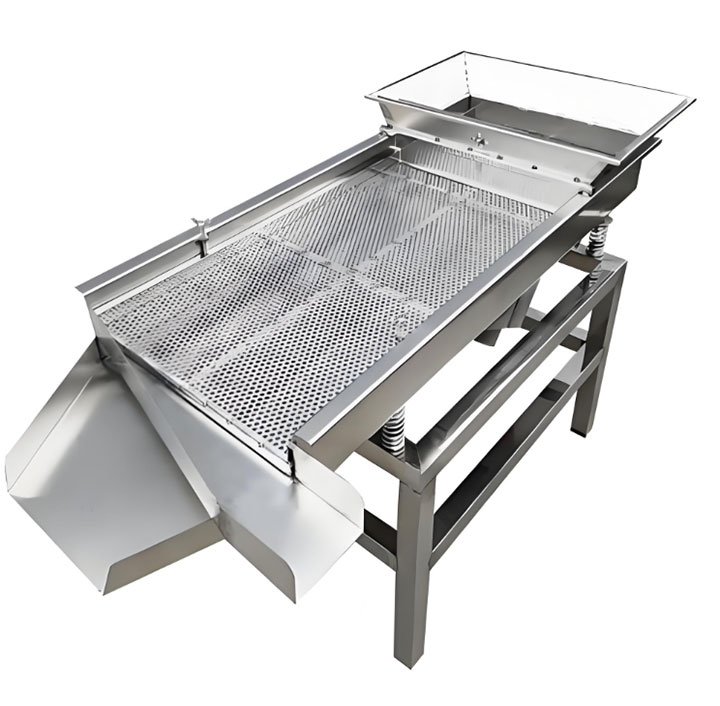
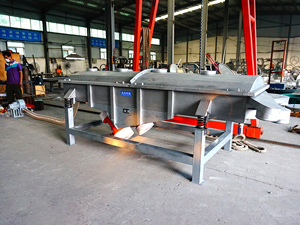
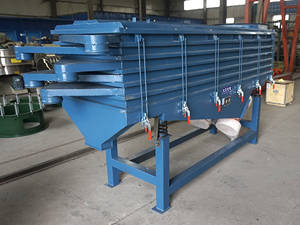
Different sectors demand tailored configuration parameters to achieve maximum output. Here is how our linear vibrating screens perform across critical industrial sectors:
| Industry Sector | Target Materials | Key Technical Focus |
|---|---|---|
| Chemical & Resin | PVC powder, plastic pellets, chemical fertilizers | Explosion-proof motors, dust-sealed covers, corrosion resistance. |
| Food & Pharmaceutical | Sugar, starch, flour, active pharmaceutical ingredients | Mirror-polished SS304/SS316L, sanitary seamless welds, FDA compliance. |
| Mining & Metallurgy | Metal powders, quartz sand, crushed aggregates | High wear resistance, heavy-duty deck structures, high G-force capacity. |
Sourcing industrial equipment through trading companies often leads to communication gaps regarding custom engineering specifications. Partnering directly with an experienced manufacturer like Dahan Machinery offers distinct operational advantages:
To simplify your technical procurement, refer to this quick factory evaluation matrix when reviewing quotes from different industrial equipment suppliers:
| Specification Item | Standard / Low-Cost Specs | Dahan Premium Engineering Specs | Why It Matters |
|---|---|---|---|
| Motor Brand & Type | Generic domestic motors | High-frequency vibratory motors (WEG / Boneng options) | Ensures continuous 24/7 operation without overheating. |
| Contact Material | Carbon steel or thin SS201 | True SS304 / SS316L (Polished weld seams) | Prevents rust contamination and extends equipment lifespan. |
| Anti-Blinding System | None or basic bouncing rings | Ultrasonic transducers / Multi-frequency setup | Crucial for fine powders (mesh 100-500) to stop blocking. |
See firsthand how our linear vibrating screen operates in the Dahan Machinery workshop, demonstrating dynamic screening efficiency and reliable material flow.
Motor power depends directly on the machine diameter, deck weight, and material bulk density. At Dahan Machinery, our engineers calculate the exact G-force required so you never overpay for wasted electricity or underpower your production line.
Yes. As a direct manufacturer, we offer full custom engineering—including special deck layouts, explosion-proof motors, and specific food-grade surface finishes tailored to your factory layout.
Don't let the wrong equipment specs slow down your production line. Connect directly with Dahan Machinery's senior engineering team today to get custom specifications, 3D drawings, and a direct factory quotation within 24 hours.


Address:China,Yanjin county forest park gate to the west 1000 meters north road.


 Online Chat
 Email
Email