


Choosing the right horizontal vibrating screen for your plant isn't just about picking a model off a spec sheet. Get it wrong, and you'll face production bottlenecks, excessive wear, or constant downtime. Get it right, and you'll see stable throughput, lower maintenance costs, and maximum ROI. This 2026 expert guide walks you through key decision points — from evaluating critical specs to matching heavy-duty vibrating screens to your specific mineral, aggregate, or industrial feedstock.
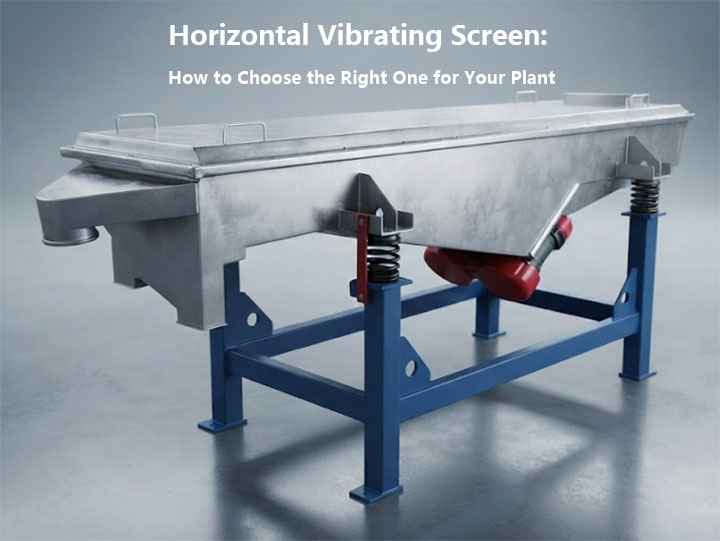
Once you've confirmed that an industrial horizontal vibrating screen fits your plant layout, the next step is to evaluate specific technical parameters. Every production line has unique requirements — target throughput (TPH), material characteristics, available headroom, and long-term maintenance capacity all influence your final equipment configuration.
The four parameters outlined below are the most critical metrics in the professional selection process. Refer to the quick-reference matrix below, and we will break down each specification in detail.
| Critical Parameter | What It Determines | Engineering Consideration & Plant Impact |
|---|---|---|
| Screen Deck Size & Layering | Processing capacity (TPH) and output fractions | Match to your target tonnage and precise particle size grading requirements. |
| Vibration Frequency & Amplitude | Material stratification speed and separation efficiency | Adjust dynamically based on material density, moisture content, and blinding tendency. |
| Motor Power & Drive System | Energy consumption, motion trajectory (linear/elliptical), and operating cost | Balance initial capital investment (CAPEX) with long-term operational efficiency (OPEX). |
| Construction Material & Liners | Equipment lifespan, wear resistance, and maintenance frequency | Select manganese steel, polyurethane, or rubber panels suited to material abrasiveness. |
Engineering Tip: Unsure which configuration matches your raw material? Contact our engineering team for a free customized screening plant layout and configuration sheet.
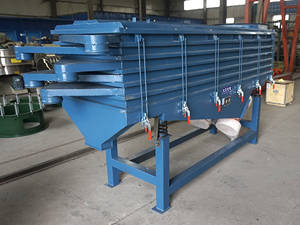
Screen deck width determines your maximum throughput capacity (TPH), while length dictates residence time — giving fine particles sufficient opportunities to pass through the apertures. Layering refers to the number of screen decks stacked vertically — single-deck produces two fractions, double-deck yields three, and triple-deck delivers four separate output grades. More layers ensure strict particle size classification but increase overall machine height and structural complexity.
When configuring your plant, always align the deck width with your target feed rate. A common engineering mistake is selecting an undersized screen for high-capacity aggregate lines — sizing up slightly prevents production bottlenecks and heavy mechanical strain.
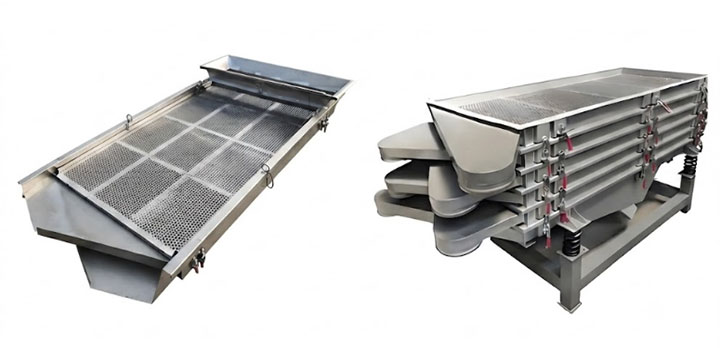
Amplitude defines the throw distance of the screen deck per cycle, whereas frequency counts the cycles per minute (RPM). High amplitude delivers an aggressive toss that accelerates heavy bed stratification, whereas high frequency provides rapid particle-to-opening alignment for fine sizing.
Heavy ores and minerals demand higher amplitude paired with lower frequency. Conversely, fine industrial powders perform best under high frequency and moderate amplitude. For sticky or damp materials, aggressive elliptical throws prevent screen blinding. Advanced setups often utilize variable frequency drives (VFD) for on-the-fly tuning.
Video: Dahan Double Deck Horizontal Linear Vibrating Screen Working Principle Demonstration
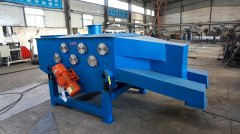
Motor power (kW) must be strictly engineered to match machine size and dynamic load — underpowered drives risk stalling under heavy feed, while oversized motors waste electric power. The drive system establishes motion trajectory: twin-motor or three-shaft configurations generate elliptical motion ideal for wet, sticky materials, while simplified linear motion drives suit dry, free-flowing aggregates.
Ensure a 10-15% safety margin when specifying motor power for continuous 24/7 heavy-duty plant operations. Evaluate maintenance accessibility as well; direct-drive systems eliminate belt wear issues and reduce long-term maintenance overhead.
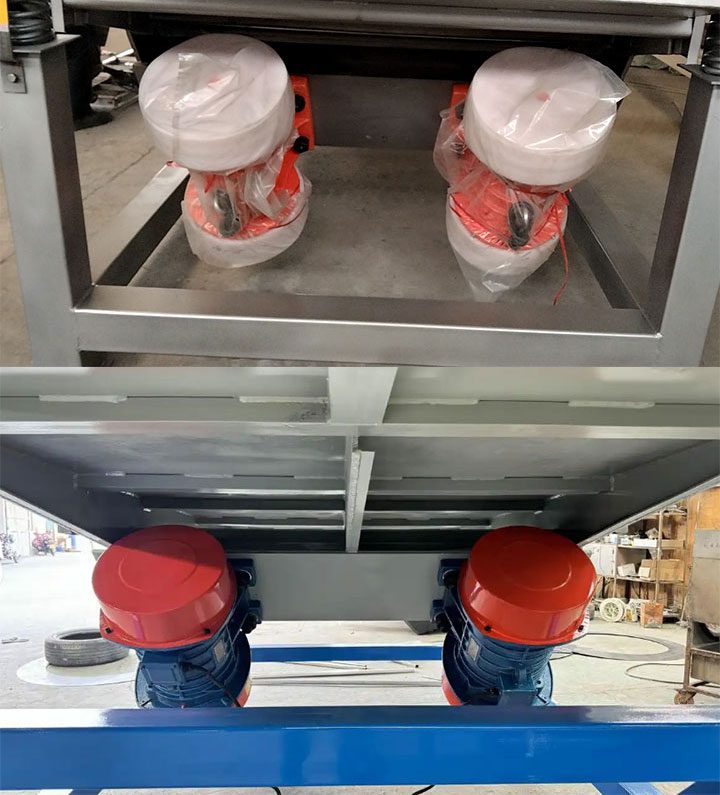
Side plate thickness, screen panel composition, and replaceable wear liners collectively dictate the total operational lifespan of your horizontal screen. Side plates must offer optimal rigidity to prevent stress cracking. Screen panels are available in woven wire mesh, heavy-duty polyurethane, rubber, or perforated steel plates, each balancing wear longevity against open-area percentage.
For high-abrasion applications like granite or iron ore, manganese steel frames combined with polyurethane or rubber panels significantly outperform standard wire mesh. Modular, replaceable wear liners protect high-impact zones, saving considerable downtime and repair costs compared to structural welding.
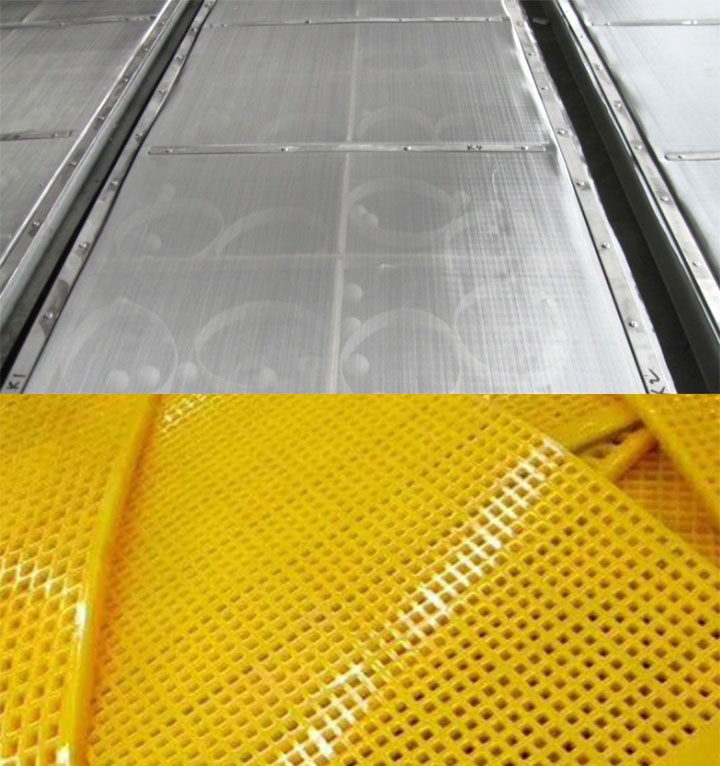
If you've started researching industrial sizing equipment, you've likely encountered the two main configurations: horizontal and inclined. At first glance, they seem to perform the same function — separating materials by particle size. However, their internal motion mechanics and material conveying methods differ significantly, directly determining which type suits your plant layout and operational goals.
Many plant buyers default to purchasing what they've used previously or what a competitor relies on. While understandable, this habit can lead to suboptimal screening efficiency, constant blinding, or unnecessary downtime. Let's break down the actual engineering differences so you can make an informed choice.
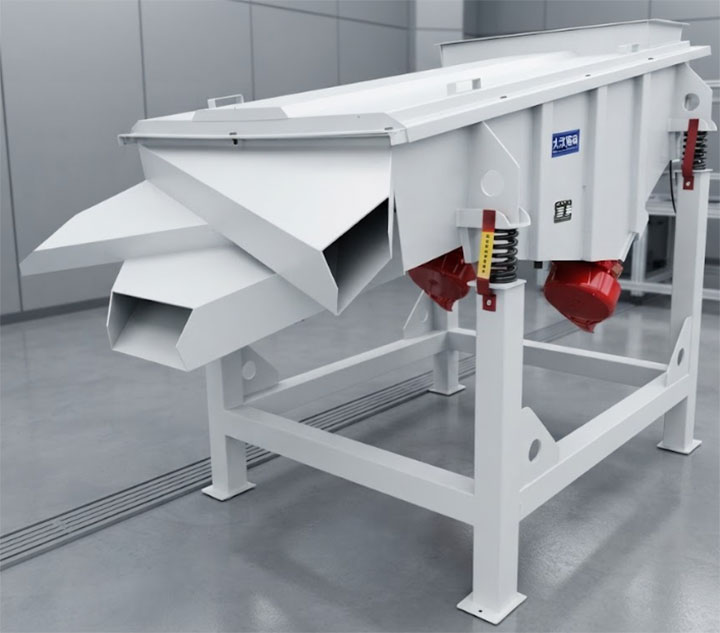
Horizontal screens are exceptionally well-suited for applications requiring high precision separation, limited vertical headroom, or handling wet/sticky materials. The most common deployment scenarios include:
On the other hand, inclined screens remain a reliable choice for many traditional operations — particularly when headroom is unlimited and your plant processes dry, free-flowing materials like coarse gravel or dry ores. They feature simpler mechanical designs, lower initial capital costs, and require less motor driving power because gravity naturally assists material travel down the deck.
However, inclined screens are generally less effective when dealing with high-moisture, sticky, or ultra-fine materials, and they demand taller structural support towers.
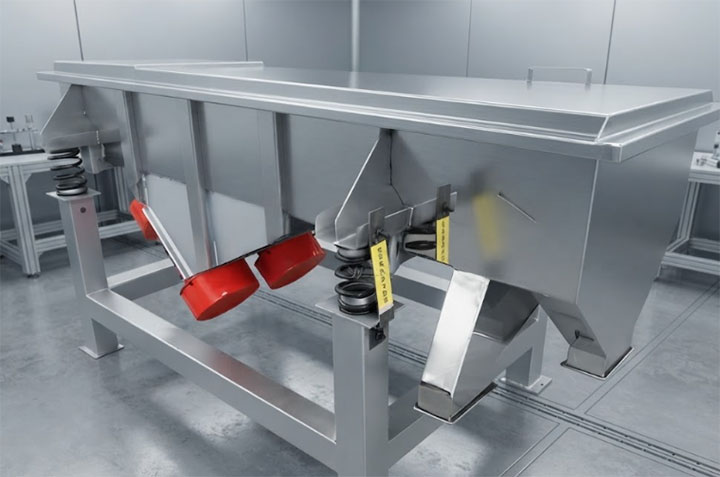
Therefore, if your plant project involves tight vertical space, cohesive feed, or rigorous particle size specifications, an industrial horizontal vibrating screen is definitively worth prioritizing. The following section walks you through the critical specifications to evaluate once you select this direction.
The technical parameters above are general guidelines. In practice, the optimal equipment configuration depends heavily on the specific material you are processing. Refer to the engineering matrix below for a quick, detailed comparison of how to configure your horizontal vibrating screen across four major industrial material categories:
| Material Category | Primary Challenge | Recommended Structure & Motion | Key Component Choices |
|---|---|---|---|
|
High-Abrasiveness Materials (Iron Ore, Granite, Quartzite, Basalt) |
Rapid mechanical wear and equipment fatigue caused by heavy minerals. | Moderate amplitude to prevent excessive stress; reinforced heavy-duty body design. | Thickened side plates, manganese steel liners, polyurethane/rubber panels, and replaceable feed/discharge wear plates. |
|
Wet or Sticky Feedstock (High-Moisture Coal, Clay, Sludge, Tailings) |
Screen blinding (clogging) and material accumulation on the deck. | Elliptical motion drive systems (three-shaft or twin-motor) for superior conveying force. | Self-cleaning polyurethane or rubber panels instead of standard wire mesh; slight discharge incline. |
|
Fine Powders & Precision Grading (Silica Sand, Barite, Cement Raw Materials) |
Demanding strict particle size classification rather than massive bulk throughput. | Multi-deck arrangements with high vibration frequency and moderate amplitude. | Fine woven wire mesh with maximum open-area percentages to ensure precision sizing. |
|
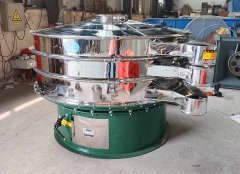
Food, Pharma & Chemicals (Grains, Granules, Fine Chemicals) |
Strict hygiene standards and the absolute need to prevent cross-contamination. | Enclosed drive mechanisms and seamless structural integration for safe processing. | Full stainless steel construction (SS304/SS316L), quick-release washdown screen panels, and sealed drives. |
To receive a precise engineering configuration, share your exact material type, moisture percentage, target throughput (in TPH), and desired output particle size gradations. Additionally, mention site constraints such as headroom, floor space limitations, or electrical standards.
Yes. In fact, horizontal vibrating screens utilizing elliptical motion configurations handle wet, cohesive, or sticky materials much more effectively than conventional inclined screens, especially when paired with self-cleaning polyurethane or rubber panels.
Inspect critical build details: side plate thickness and steel grade, overall welding craftsmanship, internationally recognized bearing brands (e.g., NSK or SKF), and whether high-impact zones feature bolt-on, replaceable wear liners.
Always clarify production lead times, local spare parts availability, comprehensive warranty terms, factory test-run records before shipping, and request reference project sites in similar industries to verify real-world operational reliability.
Get expert custom layout designs, detailed specifications, and a direct factory quotation from Dahan Machinery engineers today.
Request a Free Expert Quotation


Address:China,Yanjin county forest park gate to the west 1000 meters north road.


 Online Chat
 Email
Email