


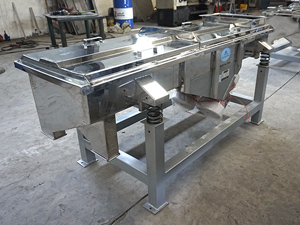
Selecting the right linear vibrating screen for your industrial production line requires a careful balance between processing capacity and separation accuracy. Based on extensive field-tuning experience across diverse material behaviors, this 2026 engineering guide cuts through standard catalog claims to evaluate the core physical factors—such as flowability, moisture, and bulk density—that dictate your operational efficiency and long-term profitability.
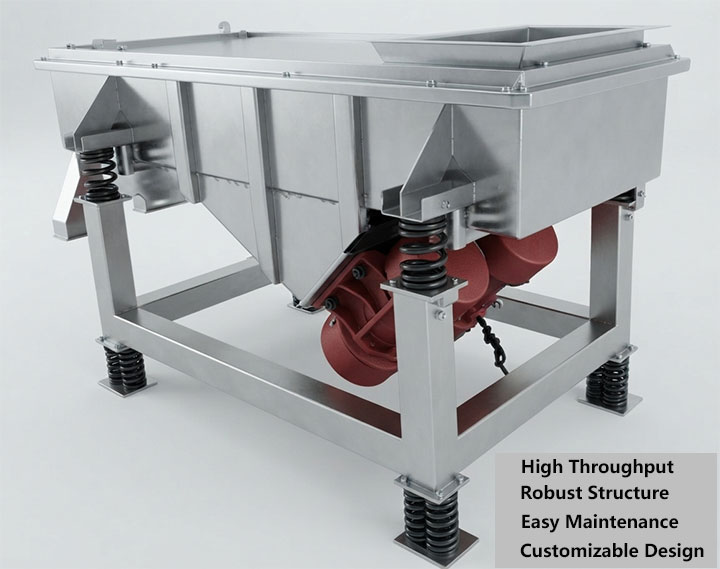
Key Takeaways for Engineers:
In industrial manufacturing, screening is not merely a separation step; it is the ultimate gatekeeper of your final product's market value. When a linear vibrating screen lacks proper precision, the resulting inefficiencies cascade through the entire production line, often costing far more in material waste than a routine equipment overhaul.
Subpar precision—such as oversized particles contaminating fine powders or unremoved fines choking downstream equipment—creates bottlenecks in grinding, mixing, and packaging. This leads to heavy material loss, batch rejections, and direct hits to your operating profit margins.
As industrial tolerances tighten globally, strict compliance with Particle Size Distribution (PSD) is mandatory for batch consistency. High-precision screening safeguards your product quality, protects brand reputation, and builds long-term client trust.
Inconsistent screening forces materials into unnecessary recycling loops, driving up power consumption and draining output. Achieving high-precision separation on the very first pass is the most efficient way to maximize throughput without inflating your facility's energy bill.
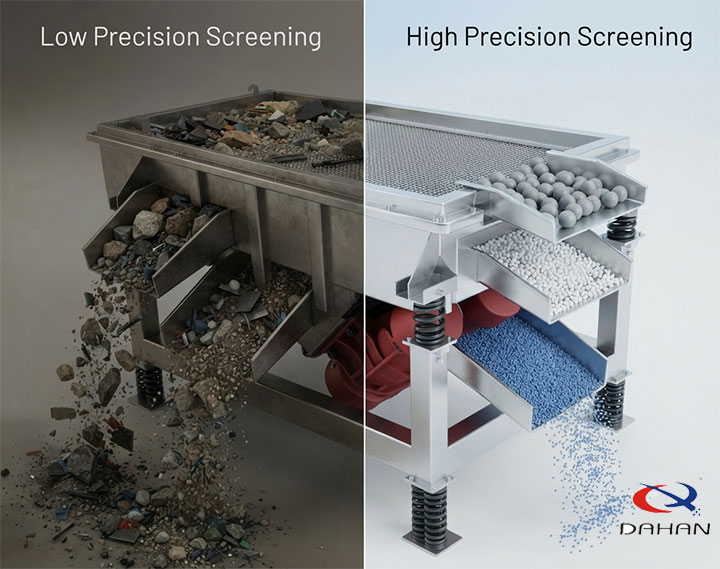
Many industrial equipment selection errors do not stem from the machine itself, but from failing to fully understand the physical properties of the processed material. The performance of a linear vibrating screen relies heavily on material-mesh interaction. Drawing from decades of field-tuning experience across various bulk materials, our engineering team highlights three critical physical dimensions every engineer must evaluate:
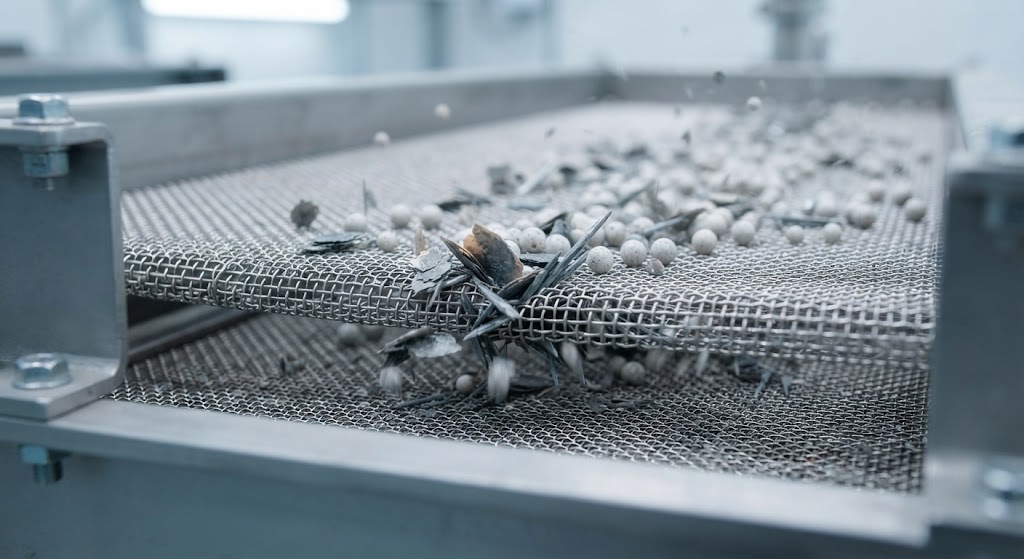
Particle shape directly governs how easily material travels through the screen mesh. Spherical or regular particles move smoothly, yielding high screening efficiency. In contrast, flaky, needle-like, or fibrous particles frequently cause mechanical "bridging," leading to severe mesh blinding and reduced throughput.
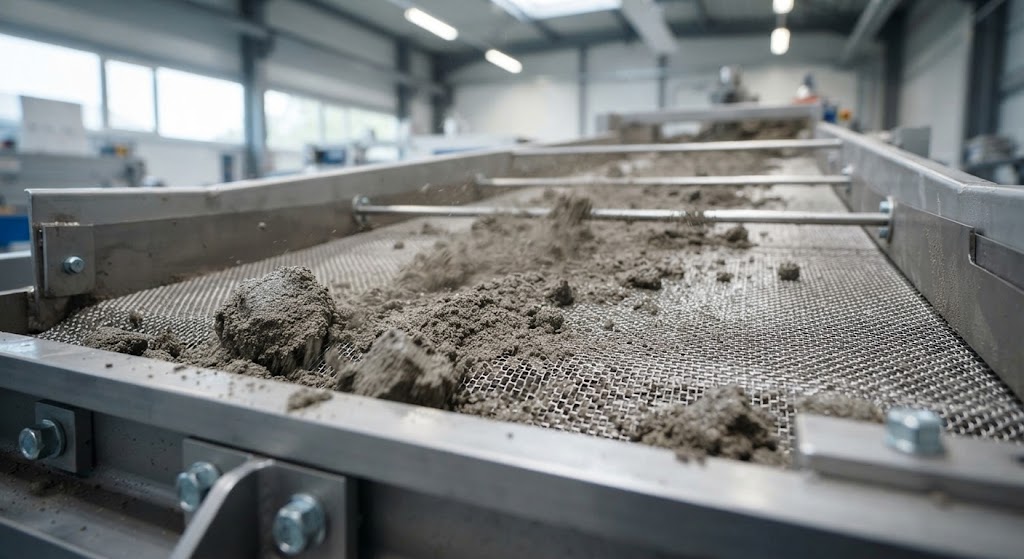
Moisture is often the primary bottleneck in fine screening. Materials with high surface moisture or electrostatic adhesion tend to agglomerate, creating inactive dead zones on the deck. Pinpointing your material's adhesion threshold dictates whether you need to boost excitation force or integrate an ultrasonic de-blinding system.
Bulk density directly dictates the structural load requirements and motor excitation force configuration. High-density aggregates generate heavy inertial impact on the screening surface. Without robust structural engineering, this can cause frame fatigue or drive motor damage.
In industrial screening engineering, throughput and separation precision naturally act as opposing forces on a see-saw. Chasing maximum feed rate alone often triggers incomplete classification, whereas obsessing over hyper-precision severely restricts your hourly output. Mastering this balance is the hallmark of advanced >linear vibrating screen engineering.
The secret to a successful operational design lies not in sacrificing one metric for the other, but in identifying the optimal economic equilibrium—meeting strict product purity specifications while driving unit output to its maximum limit.
By precisely modifying the throw angle, motor excitation frequency, and screen deck inclination, engineers can actively regulate the material's forward velocity and stratification rate across the mesh surface, effectively smoothing out bottlenecks.
Utilizing a multi-deck screen structure effectively splits the heavy separation workload. This ensures high-efficiency classification across diverse particle size ranges while dramatically amplifying total facility feed capacity.
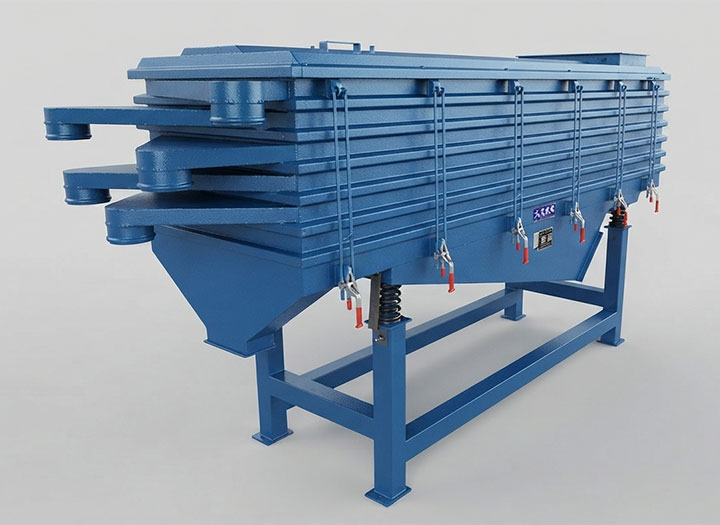
To ensure the equipment proposal you receive from manufacturers is fully optimized rather than merely functional, make sure your engineering team prepares this core checklist before reaching out for a quotation:
Send your technical parameters to our senior engineering team. We will deliver a tailored linear vibrating screen selection proposal and efficiency analysis within 24 hours.
Get Your Custom Sifting ProposalWhether you are troubleshooting persistent screening inefficiencies or designing a brand-new processing line, our senior engineering team is equipped to deliver a tailor-made solution. From fine-tuning dynamic excitation parameters to configuring specialized anti-corrosion or sanitary-grade stainless steel structures, we turn engineering theory into measurable throughput growth.
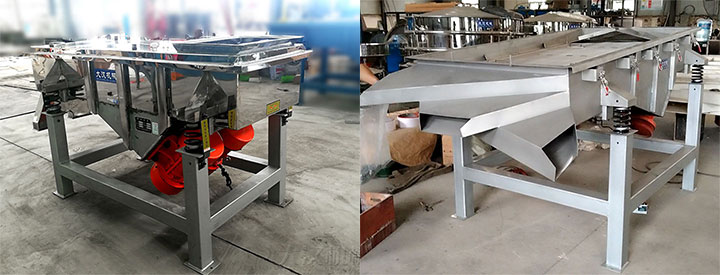
For materials with high surface moisture or strong cohesion, standard meshes easily clog. We recommend configuring an ultrasonic de-blinding system or adjusting the linear vibration angle and excitation force to increase particle mobility and prevent dead zones.
A single-deck screen is typically used for simple two-fraction separation (oversize and undersize). A multi-deck screen structure allows for simultaneous grading into multiple particle size fractions in a single pass, improving processing capacity and space efficiency.
Linear vibrating screens are generally preferred for high-throughput, heavy-duty industrial sizing, grading, and dewatering of granular or coarser materials. Rotary sifters (or tumbler screens) are usually better suited for ultra-fine, lightweight, or precision powder classification.
To receive a fully optimized selection proposal, you should provide your material name, bulk density, surface moisture, target hourly throughput (t/h), and required separation mesh sizes.
Share your core technical parameters (material name, target throughput, and precision requirements) with our specialists. We provide professional linear vibrating screen selection proposals and tailored technical drawings to fit your specific operating conditions.
Request Your Free Engineering Proposal Today


Address:China,Yanjin county forest park gate to the west 1000 meters north road.


 Online Chat
 Email
Email