


If you are sourcing screening equipment for mineral processing, aggregate production, or industrial powder handling, you will frequently encounter the term "rectangular vibrating screen." Crucially, this is not a single machine model, but a broad equipment category encompassing linear vibrating screens, heavy-duty mining screens, and specialized dewatering screens.
Selecting the wrong configuration leads directly to mesh blinding, premature equipment wear, or severe production bottlenecks. This technical breakdown analyzes the distinct classifications, working mechanisms, and material-matching criteria to help you identify the precise industrial screening solution for your line.
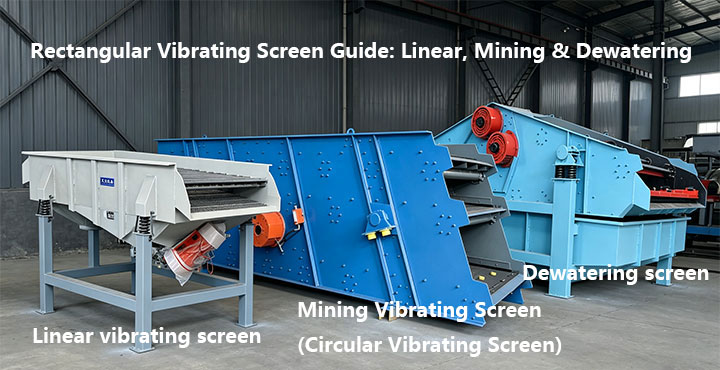
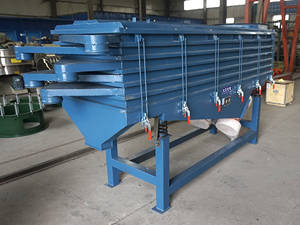
A rectangular vibrating screen is an overarching industry classification rather than a single standalone machinery model. Its defining external characteristic is a rectangular screen box driven by dynamic excitation forces to achieve efficient material classification.
Despite variations in internal design, equipment within this category shares three fundamental engineering traits:
In heavy industrial operations, the rectangular vibrating screen category is primarily categorized into three distinct machine sub-types:
| Equipment Sub-Type | Classification Basis | Primary Engineering Function | Typical Industry Application |
|---|---|---|---|
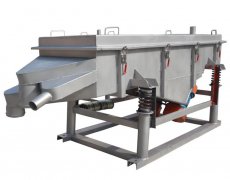
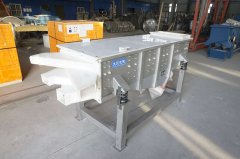
| Linear Vibrating Screen | Motion trajectory (Linear motion) | Fine grading, screening, and light dewatering | Chemical processing, food ingredients, and industrial powder handling. |
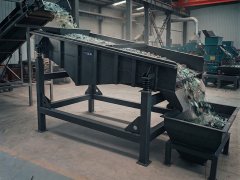
| Mining Vibrating Screen | Application field (Heavy-duty) | Large-scale heavy-duty sizing & scalping | Hard rock mining, metallurgy, and bulk coal preparation. |
| Dewatering Screen | Core function (Solid-liquid separation) | High-frequency moisture reduction ("dry discharge") | Washed sand production, coal slurry reclamation, and mineral tailings. |
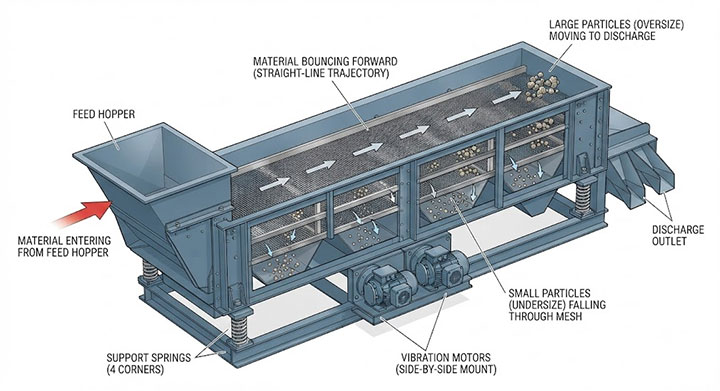
The standard rectangular vibrating screen (specifically the linear configuration) relies on a synchronized dual-motor drive system to generate stable, directional mechanical motion. The operational process is categorized into three distinct mechanical phases:
Excitation Phase: Two counter-rotating vibration motors generate synchronized centrifugal forces. When combined, the lateral forces cancel out while the vertical forces compound, driving the entire screen box into an aggressive linear reciprocating trajectory.
Separation Phase: As material feeds onto the screening deck, it is continuously "thrown" forward at a fixed throw angle. This rhythmic bouncing action fluidizes the material bed, preventing compaction and ensuring optimal stratification across the mesh surface.
Grading Phase: Finer particles matching or smaller than the aperture size drop smoothly through the mesh openings, whereas oversized particles continue traveling along the inclined deck toward the discharge chute.
As established, "rectangular vibrating screen" encompasses three major machinery variations: linear vibrating screens, mining vibrating screens, and dewatering screens. How do they interrelate, and where are their technical boundaries? The comprehensive engineering comparison below details their differences:
| Comparison Dimension | Linear Vibrating Screen | Mining Vibrating Screen | Dewatering Screen |
|---|---|---|---|
| Definition Basis | Classified by motion trajectory | Classified by application field | Classified by core engineering function |
| Motion Trajectory | Strictly linear or near-linear | Versatile (Linear, Circular, or Elliptical) | High-frequency linear motion |
| Structural Features | Dual vibration motor drive, streamlined modular layout | Heavy-duty rugged body, reinforced crossbeams, modular polyurethane screen plates | Steep screen deck inclination angle with high-frequency vibrators |
| Primary Function | Fine grading, screening, light dewatering, and sizing | Heavy-duty bulk material scalping, coarse sizing, and primary separation | Aggressive solid-liquid separation for low-moisture "dry discharge" |
| Suitable Materials | Fine and granular powders, chemical/food ingredients (0.074mm–20mm) | Large, heavy impact-resistant ores, stones, sinter, and heavy coke | High-moisture slurries, tailings, coal slime, and washed sand |
It is important to note that these three types are not mutually exclusive. Instead, they classify rectangular screens from three separate engineering dimensions: linear screens by how they move, mining screens by where they are deployed, and dewatering screens by what specific task they accomplish. Grasping this distinction prevents misapplication during industrial plant design.
To illustrate how theoretical parameters translate into real-world performance, let's look at a recent application of our linear vibrating screen in the agricultural and food processing sector.
A client processing dried daylilies required a high-efficiency grading solution. Daylilies are delicate, and manual sorting is highly labor-intensive, slow, and prone to inconsistent sizing. The client needed machinery capable of classifying the product into distinct grades based on length and size, without causing breakage or contamination.
Given the material's light bulk density and the strict requirement for gentle handling, our engineering team deployed a multi-deck Linear Vibrating Screen tailored for the food industry. The configuration included:
To help our technical engineering team configure the optimal model and deliver a precise, competitive quotation for your project, please have the following six technical parameters ready:
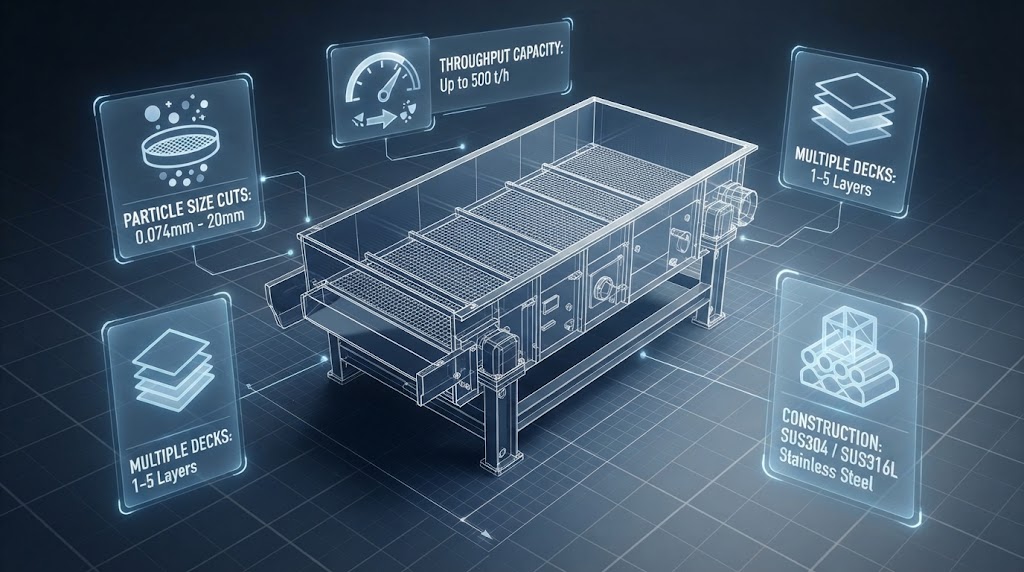
Don't let wrong specifications delay your production. Send us your material details and capacity requirements—our senior engineers will respond with a customized layout and quote within 24 hours.
Get an Engineering Quote NowTo help you quickly identify the right equipment before diving into specific technical details, use the matrix below for a rapid material-to-equipment cross-reference:
| Target Material Category | Key Material Characteristics | Recommended Equipment Type | Core Processing Purpose |
|---|---|---|---|
| Coal Slime / Washed Sand | High moisture content, slurry, wet aggregate | Dewatering Screen | Solid-liquid separation ("dry discharge") |
| Chemical & Food Powders | Fine particles, dry granular, 0.074mm–20mm | Linear Vibrating Screen | Precision grading, sizing, and safety screening |
| Raw Ores / Large Rocks | Heavy bulk, high impact, heavy density | Mining Vibrating Screen | Heavy-duty scalping and coarse sizing |
The most cost-effective screening equipment is not necessarily the most expensive model, but the one precisely engineered for your specific application. Evaluate your material across the following three core dimensions:
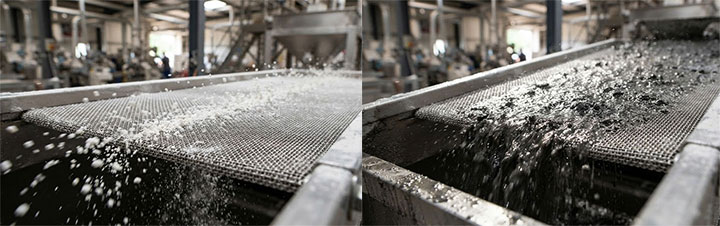
For dry materials—such as dry powders, granules, or aggregates—a standard linear vibrating screen provides efficient grading with optimal cost-effectiveness. Conversely, for wet or high-moisture materials—such as mineral tailings, washed sand, or coal slime—a dedicated dewatering screen is mandatory to perform effective solid-liquid separation and achieve dry discharge.
Different moisture levels dictate completely different screen design principles. Feeding high-moisture slurry into a standard linear screen almost invariably causes severe mesh blinding and a dramatic drop in processing efficiency.
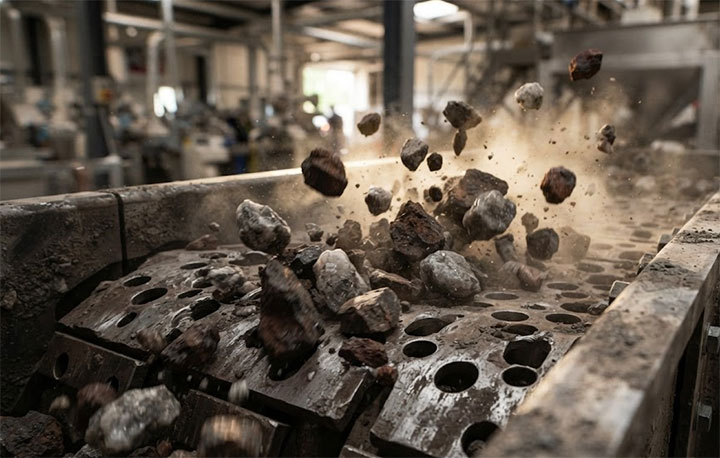
Large, heavy-density bulk materials—such as raw ores, metallurgical coke, and hot sinter—generate intense dynamic impacts. A heavy-duty mining vibrating screen equipped with reinforced crossbeams and durable polyurethane or steel screen plates is essential to withstand these forces.
Conversely, fine to medium-sized particles with lower bulk density—such as chemical powders or food ingredients—are best processed using a linear vibrating screen, which accommodates mesh sizes ranging from 0.074mm to 20mm.
Additionally, material abrasiveness must be factored in. Highly abrasive feeds (e.g., quartz sand, silica, or slag) require specialized wear-resistant linings and durable screen media to prevent premature component failure.
Required throughput directly dictates the physical scale of the equipment. Low-capacity processing lines (a few tons per hour) can utilize compact single- or double-deck units. In contrast, high-capacity industrial plants processing tens or hundreds of tons per hour require larger frames or multi-deck configurations.
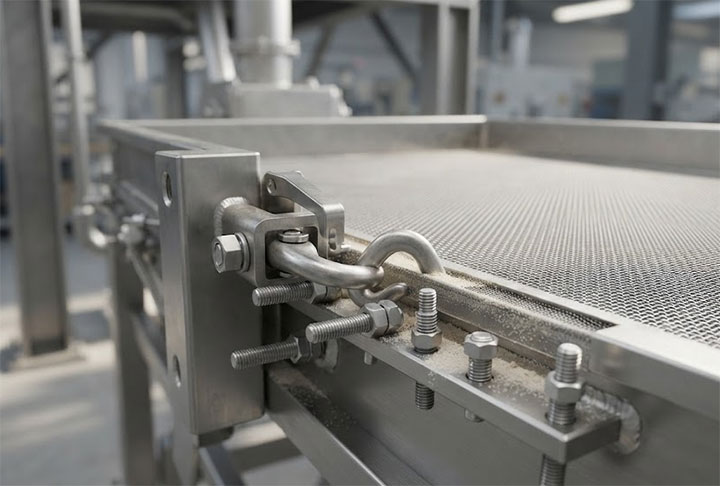
If your line demands multi-fraction grading (producing several size cuts simultaneously), a multi-deck arrangement is necessary. Furthermore, consider the ease of mesh replacement, as quick-change tensioning systems significantly reduce long-term maintenance downtime.
By carefully auditing these four parameters—moisture content, particle density, size profile, and target throughput—you can accurately narrow down and select the ideal rectangular vibrating screen for your operation.
Yes, but equipment selection depends on the moisture level. For standard dry grading, a linear vibrating screen is ideal. However, for high-moisture slurries (such as coal slime or washed sand), we recommend a specialized Dewatering Screen featuring a steep inclination angle and high-frequency vibration to achieve efficient "dry discharge."
Our linear vibrating screens utilize a directional linear throwing trajectory that naturally prevents material compaction and mesh blinding. For particularly sticky or cohesive materials, we offer customized screen media options and anti-clogging cleaning devices to ensure continuous operation.
Our equipment is engineered for quick maintenance. Equipped with a quick-release tensioning system, a single operator can typically replace the screen mesh in less than 30 minutes, minimizing costly production downtime.
Choosing the ideal rectangular vibrating screen is never about purchasing the most expensive model—it is about securing the exact machinery configured for your specific material characteristics and processing goals.
As outlined, the category covers three major sub-types: linear vibrating screens, mining vibrating screens, and dewatering screens. Prior to inquiry, clarifying your six key parameters (cut size, throughput, deck count, inclination angle, motor power, and construction material) combined with your four core material properties (moisture, density, size, and capacity) will ensure a precise match.
Not sure which screen fits your material? Send us your material specifications or sample data—our senior engineering team will evaluate your requirements and recommend the optimal custom solution with a full quotation within 48 hours.
Maximize your plant's screening efficiency and avoid costly equipment mismatches.
Request Your Free Technical Proposal


Address:China,Yanjin county forest park gate to the west 1000 meters north road.


 Online Chat
 Email
Email